
Feeling Like You Can't Compete With "Free"?: How to Sell Out Paid Events at Your Indoor Playground
If you run an indoor playground, play café, or any type of family-focused business, you’ve likely experienced the moment where you open Instagram, scroll through Facebook, or check your local parent group—and immediately feel a sense of frustration.
Everywhere you look, there are free events being promoted.
Free Easter egg hunts, free family festivals, free bounce houses, free face painting.
At first glance, it can feel like you’re operating at a disadvantage. It’s easy to assume that if families have access to free experiences, they will naturally choose those over anything ticketed. Many owners internalize this and begin to question whether it even makes sense to offer paid events at all.
This concern comes up constantly in conversations with play café and indoor playground owners. The underlying belief is always the same: if free exists, paid won’t work.
But that belief is fundamentally flawed.
You are not actually competing with free events. You are offering a different category of experience entirely. Once you understand that distinction, it becomes significantly easier to design events that parents are not only willing to pay for, but actively seek out.
What Free Events Actually Offer (and Why That Matters)
Free events serve an important purpose in most communities. They create accessibility, bring people together, and offer families an easy, low-commitment way to get out of the house.
However, because they are designed to accommodate as many families as possible, the experience they deliver is inherently broad and high-volume. That scale introduces trade-offs that are often overlooked when owners compare themselves to these events.
In practice, most free events are crowded, fast-paced, and loosely structured. It is not uncommon to see hundreds of children gathered in one space, long lines forming for activities, and a wide range of ages attempting to participate in the same experience.
An Easter egg hunt, for example, might consist of several large waves of children running simultaneously toward eggs, with the entire activity completed in a matter of minutes. Attractions like bounce houses or character meet-and-greets often involve extended wait times, making it difficult for parents to maintain a sense of flow or predictability throughout the event.
For families with older children, this environment can still be enjoyable. But for many parents—particularly those with babies, toddlers, or multiple young children—the experience can quickly become overwhelming.
This is not a flaw in free events. It is simply the result of designing for maximum participation.
But it also creates a very clear gap in the market.
What Parents Are Actually Willing To Pay For (Even When '"Free" Is Available)
When families choose to attend a paid event at an indoor playground or play café, they are not paying for the individual components of the event. They are not paying for plastic eggs, a simple craft, or even the presence of a seasonal character.
They are paying for the experience as a whole.
More specifically, they are paying for an experience that feels intentional, manageable, and enjoyable from beginning to end.
A well-designed paid event offers structure, pacing, and predictability. Instead of navigating large crowds, parents can expect smaller group sizes and clearly defined sessions. Instead of long lines and rushed interactions, they experience activities that are thoughtfully planned and appropriate for their child’s age and stage.
This allows both the child and the parent to fully engage in the experience rather than simply trying to keep up with it.
The distinction here is critical. Many owners assume they need to compete by offering more—more activities, more entertainment, more scale. In reality, the value of a paid event lies in offering less, but delivering it with greater care and intention.
The Opportunity Most Owners Are Missing
One of the most common mistakes I see, and one I made myself early on, is assuming that if an event already exists in your community, there is no room to create your own version—especially if that existing event is free.
This mindset leads many owners to avoid seasonal events altogether or to significantly underprice them out of fear that they won’t sell.
A more effective approach is to shift the question entirely.
Instead of asking, “How do I compete with what already exists?” ask, “What is currently missing?”
That gap is where your opportunity lies.
In my own experience, there were multiple Halloween events already happening in my area, most of which were hosted by community organizations. Initially, I viewed this as competition. Over time, however, I began to notice a consistent pattern: nearly all of these events were designed for older children.
The activities, pacing, and overall environment were not well-suited for babies or younger toddlers.
Rather than attempting to replicate what was already available, I chose to focus on what was not.
We created a series of Halloween events specifically for children under two years old, including one called the “Baby Boo Bash.” Every aspect of the event—from the activities to the layout to the sensory environment—was intentionally designed for that age group.
The result was not just positive feedback, but multiple sold-out events.
What initially felt like a limitation—serving a smaller age range in a smaller space—became a clear differentiator. By focusing on a segment that was underserved by free events, we were able to create an experience that felt uniquely valuable.
Why Seasonal Events Like Easter Are a Perfect Example
Easter provides one of the clearest examples of this dynamic.
Most communities host large, free egg hunts. These events are typically outdoors, involve hundreds of children, and are structured in a way that prioritizes speed and volume. Within a very short period of time, the activity is over.
Now compare that to a thoughtfully designed indoor event.
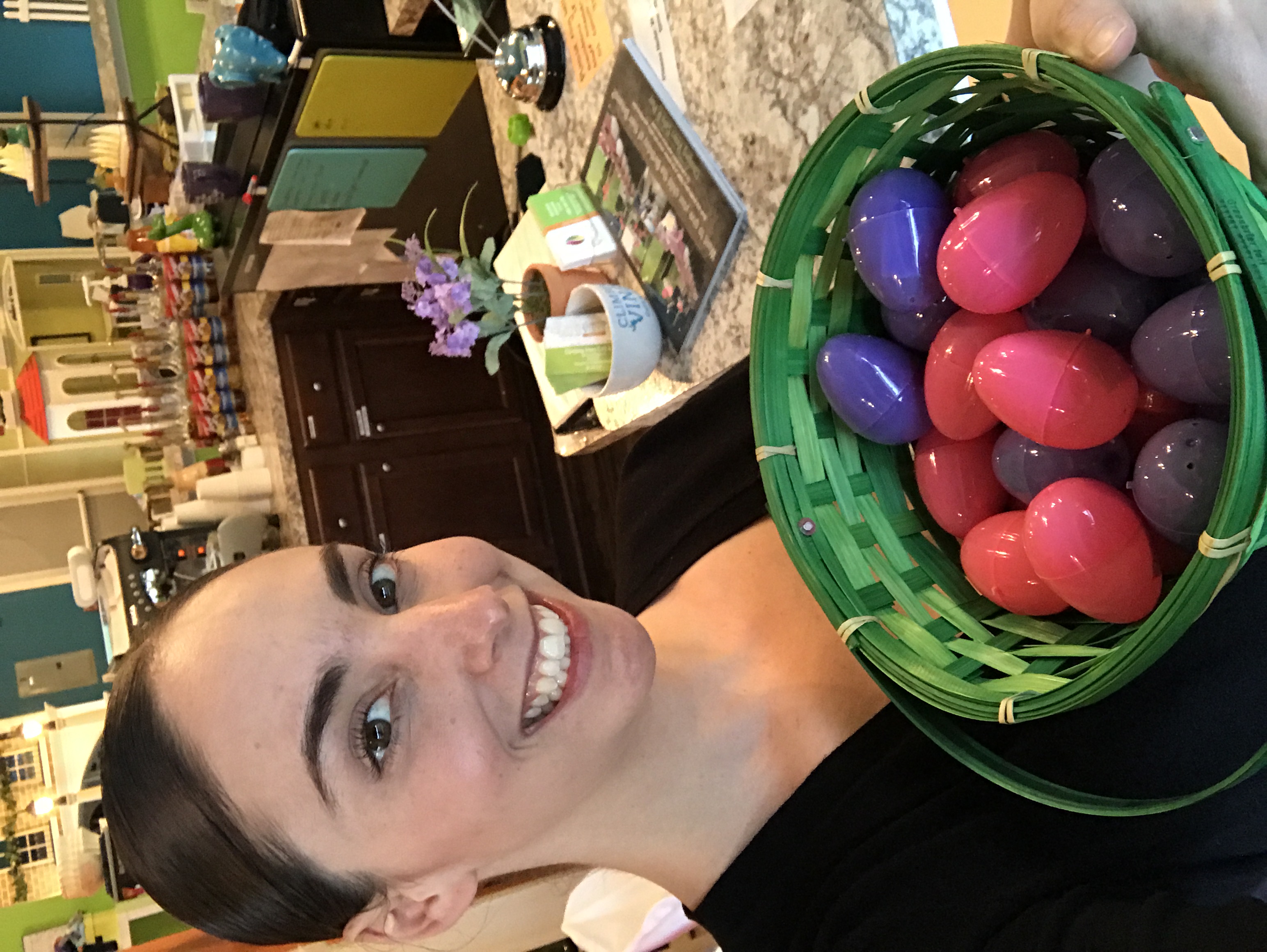
Instead of one large group, you offer multiple small sessions with limited capacity. Each session is tailored to a specific age group—crawlers, toddlers, preschoolers—ensuring that every child can participate comfortably.
Each child has access to a meaningful number of eggs. The experience may include a keepsake craft, a short storytime, or guided interaction. Photos with the Easter Bunny are scheduled, eliminating long wait times and reducing stress for both parents and children. Open play is calm and controlled rather than chaotic.
The difference between these two experiences is significant.
In the first, parents are managing logistics. In the second, they are actually present.
That is what they are paying for.
The Role of Working Parents
Another group that is often overlooked in this conversation is working parents.
These families typically have limited time with their children, often confined to evenings and weekends. When that time becomes available, they are not necessarily looking for the largest or most exciting option. They are looking for something that feels meaningful and well-spent.
Free events, while appealing in theory, can require significant effort—parking, crowds, long lines, and unpredictable timing. For many working parents, this does not feel like quality time.
A well-organized, ticketed event offers a different value proposition. It provides a predictable, low-stress environment where they can focus on spending time with their child rather than managing the experience.
For many families, paying for that level of convenience and quality is an easy decision.
Why You Don’t Need Everyone to Attend
One of the most important mindset shifts for owners is understanding that your events do not need to appeal to your entire community in order to be successful.
In most cases, selling between 50 and 100 tickets is more than enough to create a highly profitable event. This can be achieved through a small number of sessions with limited capacity.
This means you are not competing for mass participation. You are targeting a specific segment of families who value the type of experience you offer.
There will always be families who prefer free events, and that is completely acceptable. Those families are simply not your target audience for this particular service.
Your goal is not to serve everyone. It is to serve the right people well.
The Same Dynamic Applies to Classes and Storytimes
This same pattern appears in classes and storytime offerings.
Most communities have free options available through libraries, community centers, or local organizations. These programs are valuable and widely utilized, but they are also designed for accessibility and volume.
As a result, they are often larger, less structured, and more generalized.
Premium classes, on the other hand, are designed with a different intention. They focus on smaller group sizes, consistent routines, and developmentally appropriate programming. Instructors are often trained, and the experience is curated to support both the child and the parent.
Parents who experience this difference often recognize the value immediately.
This is not about replacing free options. It is about offering something that serves a different need.
Why Paid Experiences Create More Engagement
There is also a psychological component that plays a significant role in the success of paid events.
When people pay for something, even a small amount, they are more likely to value the experience. They show up on time, engage more fully, and are more likely to follow through.
This increased level of engagement often leads to stronger outcomes for your business. Families take photos, share their experiences, and recommend your events to others. They return for future events and become part of your core community.
This type of momentum is much more difficult to achieve in large, free events where participation is casual and transient.
How Sponsorships Can Transform Your Event Profitability
If cost or pricing is a concern, there is one strategy that can significantly improve the economics of your events: local sponsorships.
Your events are not only valuable to families—they are also valuable to local businesses that want to connect with those families.
Many small businesses are actively looking for ways to market themselves within their community in a way that feels authentic and relationship-driven. Partnering with a family-focused event provides a direct and meaningful opportunity to do so.
For example, if your event requires a few hundred dollars in supplies—such as eggs, crafts, decorations, or refreshments—you can approach a local business with a sponsorship opportunity.
In exchange for covering those costs, the business can receive visibility through your marketing materials, a presence at the event, and direct exposure to attending families. This could include logo placement, mentions in email campaigns, or simple branding on take-home items.
Businesses such as real estate agents, pediatric dentists, children’s photographers, preschools, and family-oriented service providers are often strong candidates for these partnerships.
This approach benefits all parties involved. The business gains targeted exposure, families receive a well-executed event, and your costs are reduced—allowing you to increase profitability or adjust pricing as needed.
Once you establish one successful sponsorship relationship, it becomes much easier to repeat and scale this model across future events.
If there is one takeaway from this, it is this:
Stop trying to compete with free.
You are not trying to out-free free. You are offering a different experience entirely—one that is smaller, more intentional, and designed with a specific audience in mind.
For many families, that experience is not only worth paying for—it is exactly what they are looking for.
And when you design your events with that level of clarity, you stop feeling like you are competing and start operating in a category of your own.
About The Author

Michele Caruana
Play Cafe Academy Founder & Blog Author
I have over a decade of hands-on local business experience and tough lessons under my belt, and I am passionate about helping current and prospective play based business owners AVOID the same mistakes myself and SO many other business owner's make. Even though I have a Master's Degree in Economics and Years of Business and Marketing experience, it took me YEARS to "crack the code" and turn my Indoor Playground from an expensive hobby into a business-- and I want to get YOUR business get there in less time and with much less stress.
Categories
All Categories