
From Purchase to Pivot: What Kaylinn’s Journey Teaches Us About Buying — and Rebuilding — an Indoor Play Business
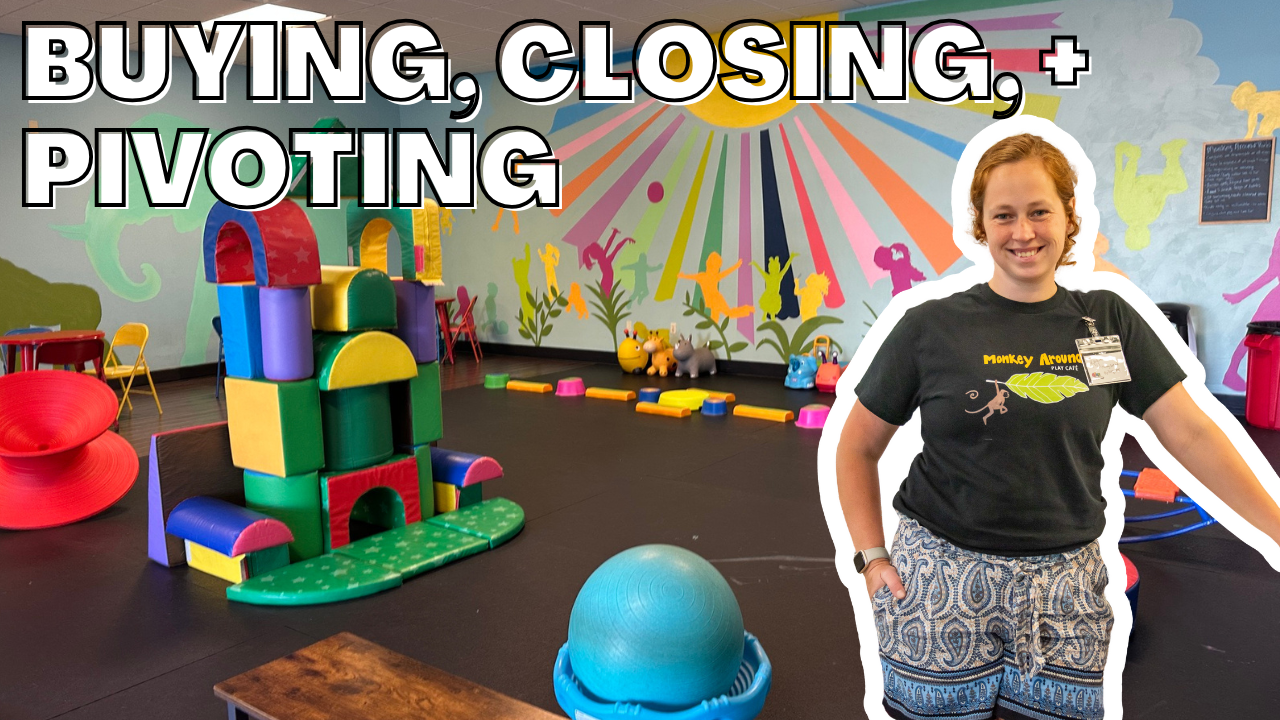
When most people picture opening an indoor playground or play café, they imagine starting from scratch.
A custom buildout. A brand-new layout. Fresh branding. A carefully planned launch.
But that is not how Kaylinn’s story began.
In my recent conversation with Kaylinn — known online as Kay’s Play Days, but the former owner of Monkey Around Indoor Playground — we talked about a path that many aspiring owners quietly consider: buying an existing play space instead of building one from the ground up.
On paper, it feels like the smart move. Faster. Cheaper. Less risky. The hard part should already be done.
Her experience proved otherwise.
Instead of stepping into a turnkey operation, Kaylinn inherited hidden challenges, operational issues, and structural limitations that ultimately forced her to close the business entirely and rethink everything. What followed wasn’t a failure story — it was a strategic pivot that gave her clarity most owners never get until years later.
And honestly, that pivot is where the real lessons live.
If you’ve ever thought, “Maybe I’ll just buy an existing space and skip the hard part,” her story is one every serious owner needs to hear.
Buying an Existing Business Doesn’t Mean You’re Buying Ease
It’s easy to assume that acquiring a space automatically saves you time and stress.
The equipment is already installed.
The buildout is complete.
Customers recognize the name.
Revenue should start immediately.
In theory, you’re skipping the messy startup phase.
In reality, as Kaylinn experienced, you’re also inheriting someone else’s decisions.
And you don’t always get to choose which ones.
You inherit layouts you wouldn’t design. Systems you didn’t create. Maintenance that may have been deferred for years. Customer expectations shaped by a completely different owner.
Instead of building intentionally, you spend your energy undoing.
That is a very different kind of work — and often a much heavier one.
Monkey Around wasn’t simply “plug and play.” There were operational and structural realities that weren’t obvious at first glance, and fixing them required far more time, money, and emotional bandwidth than expected.
What felt like a shortcut quickly became constant troubleshooting.
The biggest mindset shift here is this: buying an existing business doesn’t eliminate problems. It just changes the type of problems you have to solve.
Due Diligence Has to Go Beyond the Numbers
One of the most practical lessons from Kaylinn’s experience is how deep your due diligence really needs to go.
Most buyers look at revenue and expenses and think that’s enough.
It’s not.
You also need to understand the bones of the business.
How old is the equipment?
What repairs have been delayed?
How efficient is the layout during peak hours?
Are systems documented or just “tribal knowledge”?
What is the local reputation?
What expectations have customers been trained to have?
These details don’t show up neatly on a spreadsheet, but they determine how hard your day-to-day life will feel as an owner.
Too often, owners save money upfront by purchasing an existing space only to spend far more later correcting issues they couldn’t see at first.
What looks affordable on paper can become expensive fast.
Sometimes the Most Strategic Move Is to Stop
One of the most honest and refreshing parts of Kaylinn’s story is something we don’t talk about enough in entrepreneurship: she chose to close.
Not because she wasn’t capable.
Not because she didn’t care.
But because the model wasn’t working the way it needed to.
And continuing to force it would have meant more stress, more burnout, and more money poured into something fundamentally misaligned.
So she paused.
She stepped back.
She reassessed.
That takes an incredible amount of maturity as an owner.
In our industry especially, there’s this pressure to “push through” at all costs. But pushing through a broken system rarely creates a sustainable business. It usually just creates exhaustion.
Closing wasn’t failure. It was a strategic decision to stop investing in the wrong version of the business.
And that decision created space for something better.
Working Inside a Children’s Museum Changed Her Perspective
Another really interesting layer to Kaylinn’s journey is that she also works at a children’s museum.
And that contrast gave her a unique lens on the difference between programming for kids and actually owning a business.
At the museum, the focus is primarily on mission and experience. It’s about education, engagement, and community impact. Revenue still matters, of course, but it’s not the same daily pressure that comes with payroll, rent, and making sure every hour is profitable.
Ownership is different.
When it’s your business, every decision has a financial consequence. Staffing, pricing, scheduling, memberships, parties, café sales — all of it has to make sense operationally and financially.
You’re not just creating a fun environment. You’re responsible for sustainability.
Having experience in both worlds helped Kaylinn see that loving kids and loving play spaces isn’t the same thing as loving business ownership. They require different skills, different mindsets, and different kinds of resilience.
That clarity shaped how she approached her pivot. It helped her separate what she enjoyed from what she needed to structure differently if she stepped back into ownership again.
That’s a powerful distinction many owners don’t recognize until they’re already overwhelmed.
The Pivot Is Where the Real Growth Happened
What I appreciate most about Kaylinn’s story is that it didn’t end with the closure.
It evolved.
Instead of walking away discouraged, she used everything she learned to get clearer about what she actually wanted.
She wasn’t guessing anymore.
She understood:
-
what operational headaches to avoid
-
what systems needed to be in place from day one
-
what type of workload felt sustainable
-
and what kind of business model truly fit her life
That clarity only comes from experience.
Her next steps weren’t reactive. They were intentional.
And intentional businesses are almost always stronger businesses.
Sometimes what feels like a setback is actually data.
And data makes better decisions possible.
The Big Takeaway for Indoor Playground Owners
Kaylinn’s journey with Monkey Around Indoor Playground is a reminder that there is no “easy” path in this industry — only informed ones.
Buying a space isn’t automatically simpler.
Starting from scratch isn’t automatically harder.
What matters is going in with clear eyes, strong systems, and realistic expectations.
And if something isn’t working, you are allowed to pivot.
You are allowed to redesign.
You are allowed to choose sustainability over stubbornness.
That isn’t quitting.
That’s leadership.
Kaylinn’s story isn’t about closing a business. It’s about gaining the clarity to build the right one next — and that might be the most valuable lesson of all.
About The Author

Michele Caruana
Play Cafe Academy Founder & Blog Author
I have over a decade of hands-on local business experience and tough lessons under my belt, and I am passionate about helping current and prospective play based business owners AVOID the same mistakes myself and SO many other business owner's make. Even though I have a Master's Degree in Economics and Years of Business and Marketing experience, it took me YEARS to "crack the code" and turn my Indoor Playground from an expensive hobby into a business-- and I want to get YOUR business get there in less time and with much less stress.
Recent Posts
Categories
All Categories