
12 Indoor Playground or Play Cafe Mistakes I Can Spot Before You Even Open
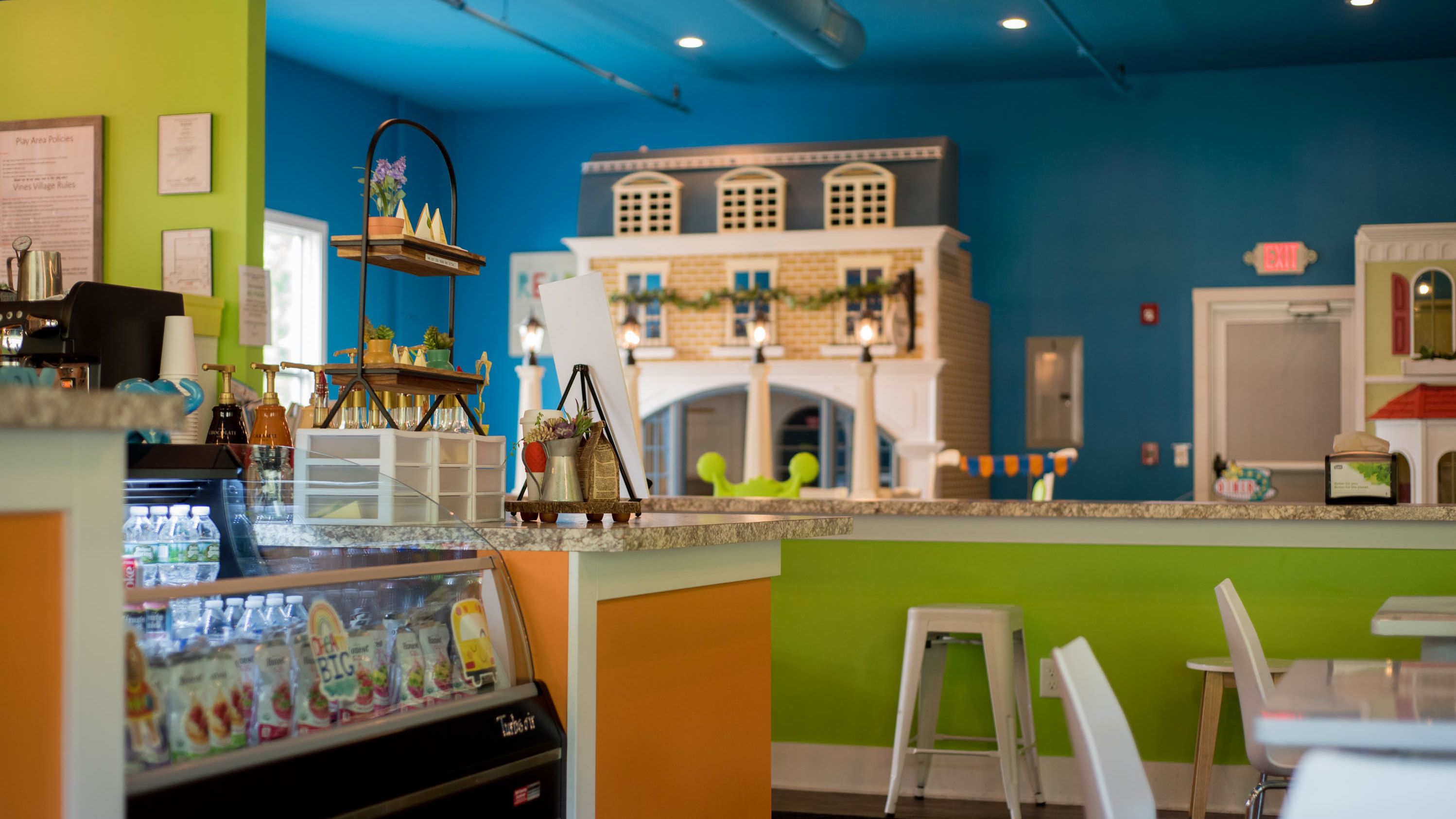
12 Indoor Playground Mistakes to Avoid Before You Open
One of the questions I get asked more than almost any other is why so many indoor playgrounds and play cafés seem to be struggling or closing. There is obviously no single answer to that question, and every business has different circumstances, so I would never look at a closure announcement online and pretend to know exactly what happened behind the scenes.
But after more than a decade in the indoor playground industry — first owning and eventually selling my own play café, and now working with hundreds of indoor playground and play café owners through Play Cafe Academy, Play Maker Society and my consulting work — I have noticed that many of the problems that eventually become expensive or difficult to solve actually started before the business ever opened.
Sometimes I can even see them in the grand-opening photos.
That doesn't mean I can predict whether a business will succeed or fail by looking at its Instagram account. Of course I can't. But experience changes what you notice. When someone new to this industry sees a beautifully staged imaginative-play area filled with hundreds of toys, they may see tremendous value for the customer. I'm immediately thinking about how long that room is going to take employees to reset. When someone sees a beautiful fabric-covered soft-play set, they may see something that perfectly matches the brand aesthetic, while I'm wondering how it's going to be cleaned after thousands of children have touched it. When someone sees an owner proudly working behind the counter every day, they may see an entrepreneur saving money on payroll, while I'm wondering whether the financial model still works if we assign a realistic cost to all of those hours.
That's the difference between designing an indoor playground that looks great when it opens and designing an indoor playground business that can actually operate efficiently and profitably for years.
Social media has made that distinction even more important. Aspiring indoor playground owners now have access to thousands of grand-opening tours, build-out videos, play café walkthroughs and beautifully curated photos, and overall I think that increased visibility has been wonderful for this industry. At the same time, it can make opening an indoor playground look deceptively simple because you're seeing the playground, café and packed grand opening without necessarily seeing the labor model, rent, margins, capacity, maintenance, cleaning procedures, birthday conversion rate, membership retention or revenue mix underneath it.
Those are the things that ultimately determine whether the business works.
So if you're planning to open an indoor playground, children's play center or play café, here are 12 decisions I would think very carefully about before you invest your money.
1. Choosing Materials for Aesthetics Instead of Commercial Reality
One of the first things I notice in new indoor playgrounds is the amount of soft, absorbent material being used. I completely understand the appeal because giant bean bags, upholstered children's furniture, plush floor cushions and fabric-covered soft-play equipment can make a play café feel warm and comfortable, and they can look beautiful in photos.
The problem is that this is a commercial children's environment, and you have to think about what those materials are actually going to be exposed to every day. Kids have runny noses, sticky hands and spills. Toddlers drool, potty-training accidents happen, parents walk around with coffee and children finish a snack before immediately running back into the play area. None of those things are unusual emergencies. They're normal parts of operating a business that serves hundreds or thousands of young children.
That's why I think there's an important distinction between something being technically washable and something being practical to clean in a busy commercial environment. A fabric cover may come off and go into a washing machine, but if a toddler wipes their nose across it at 10:15 on a packed Saturday morning, what does your employee actually do? Are they removing that cover, washing and drying it and keeping the equipment out of service until it's ready again? If not, you need to think about whether that material makes sense in such a high-touch area.
This doesn't mean everything in your business needs to be plastic, and it certainly doesn't mean you can't use carpet. My own play café had carpet, but I intentionally chose low-pile commercial carpet that was designed to withstand heavy traffic and regular cleaning.
What I want owners to do is move beyond asking whether something looks good in the space and start asking whether their staff can realistically clean and maintain it during normal operations. Don't only picture the furniture or play equipment on opening day. Picture it after 1,000 children, 5,000 children and 10,000 children have used it.
Your material choices need to survive the business you're hoping to build.
2. Filling the Play Space With Too Many Toys and Tiny Pieces
Another mistake I see frequently is assuming that more toys automatically create more value for the customer. This happens especially often in imaginative-play concepts where the grocery store is stocked with dozens of pieces of pretend food, the kitchen has every plate, cup, utensil, pot and pan imaginable, and the doctor's office or vet clinic is filled with tiny accessories.
When everything is perfectly staged before opening, it looks incredible. Then the children arrive.
One of the most important things to understand when designing a commercial play environment is that children are not necessarily going to interact with it the way an adult imagines they will. An adult may picture a toddler carefully shopping in the grocery store, checking out at the register and bringing the food into the kitchen to prepare dinner. The toddler may dump the entire basket onto the floor, carry three pieces of food across the building, leave one underneath a café table and move on to something else.
That's not playing incorrectly. It's completely developmentally appropriate. From an operational perspective, though, every additional object you put into your facility becomes something your staff needs to clean, pick up, return to the correct area, monitor for damage and eventually replace when it disappears or breaks. One extra toy doesn't matter very much, but multiply that by hundreds of pieces and several play sessions or birthday parties every day, and you've created a significant amount of labor.
I've seen spaces open with an enormous number of tiny toys and then dramatically reduce them once they've actually been operating for a while because they realize how much time they're spending putting everything back together.
I also want owners to think about whether the play environment matches the experience they're promising the parent. Play cafés often market themselves as places where caregivers can sit down with a coffee and let their children play, but if the entire play environment requires a parent to follow their toddler around facilitating pretend play, putting toys back together and constantly helping them figure out what to do next, the experience may not match that promise.
None of this means you should eliminate imaginative play. I love imaginative play, and it can be an incredibly valuable part of a play space. It simply means you probably don't need seventeen wooden tomatoes to make a grocery store feel like a grocery store. Give children enough to facilitate play, rotate accessories to create novelty, and think carefully about whether every additional object you're adding creates enough value to justify the labor it requires.
3. Designing the Entire Space Around an Adult Aesthetic
I love beautiful businesses, and I absolutely believe your branding and facility design should feel intentional and cohesive. Parents are spending a significant amount of time in these spaces, so the environment should feel clean, welcoming and enjoyable for adults.
But there is a point where an adult aesthetic can start overpowering the children's experience.
We've seen a huge movement toward neutral children's spaces filled with beige, cream, white, natural wood and muted colors. Those aesthetics can be beautiful, especially in a home, but your commercial play space isn't a home. In fact, part of the reason families are willing to pay to visit an indoor playground is because you can provide experiences they either can't or don't want to recreate in their own houses.
A parent may not want a giant colorful slide sitting in the middle of their living room, but their child may absolutely love coming to your business to use one.
This is where I think social media can sometimes distort the design process. Owners naturally want a space that photographs beautifully because photos and videos are going to be a major part of their marketing, but you also have to remember who the play environment is actually for. The adult customer may hold the credit card, but the child plays an enormous role in repeat visits. They're often the one getting into the car afterward asking when they can come back.
There is a huge middle ground between creating an overwhelmingly bright, chaotic environment and making everything beige because that's what happens to look good on Instagram right now. Create a brand that parents enjoy being around, but make sure the actual play experience is still interesting, exciting and memorable for children.
A beautiful space can help get someone through the door the first time. The experience is what helps bring them back.
4. Using Residential-Grade Products Without Understanding the Difference
Budget is obviously a major consideration when opening an indoor playground, so I completely understand why owners look for opportunities to reduce their startup costs. One area where I want people to be especially careful, though, is substituting residential products for commercial products simply because they look similar online.
A piece of furniture designed for a home might be used by one or two children for a few hours per day. Put that same item inside an indoor playground and it may be used by hundreds of children who are sitting on it, standing on it, moving it, spilling things on it and interacting with it in ways the manufacturer never anticipated. Those are completely different operating environments.
This is something I discussed with Charlotte from Children's Factory when we talked about the differences between residential and commercial children's products. When you're comparing two items, you're not only comparing what they look like in an online photo. You're also comparing construction, materials, durability and cleanability, and depending on what you're purchasing, you may need to understand applicable testing, standards, warranties, weight limits or other considerations related to commercial use.
Soft play is an easy example because two foam pieces can look almost identical online while having dramatically different foam density, coverings, seams and overall durability. You may not appreciate those differences on day one, but after hundreds or thousands of uses, they can become very obvious.
I'm not saying every single object inside an indoor playground needs to come from a commercial playground manufacturer, and I'm definitely not saying the most expensive option is automatically the best. I simply want you to understand what you're buying and what it was designed to withstand.
Before choosing the cheaper alternative, find out whether commercial use is permitted under the warranty, how the item is supposed to be cleaned, what materials are being used and whether there are relevant standards or testing requirements for its intended use. Sometimes the less expensive option will be perfectly appropriate. Other times, saving $1,000 upfront means replacing the same product multiple times later.
The goal isn't to spend the most money. It's to spend money intelligently.
5. Building an Indoor Playground Without Enough Gross Motor Play
This is one of the biggest design issues I notice, particularly in smaller play cafés and imaginative-play concepts. I'll see a beautiful grocery store, kitchen, sensory area, Montessori toys and pretend-play houses, but very few opportunities for children to actually move their bodies.
Children need opportunities to climb, slide, crawl, balance, push, pull and navigate physical challenges. That doesn't mean you need an enormous three-story playground structure or that you need to spend hundreds of thousands of dollars on equipment. Gross motor play can be incorporated at many different price points and within many different footprints, and thoughtful design can allow children of different ages and abilities to interact with the same equipment in different ways.
There's an obvious developmental reason to incorporate movement, and families are often specifically looking for places where their children can burn energy, especially when the weather makes outdoor play difficult. But there's also a business reason I care so much about gross motor play that I don't think enough aspiring owners consider: it can be incredibly efficient operationally.
Imagine twenty children playing in a grocery store, kitchen and doctor's office for an hour. When they're finished, there are probably toys everywhere and someone needs to put those environments back together.
Now imagine twenty children going down a slide for an hour. When they're finished, the slide is still a slide.
That difference becomes incredibly important once you're operating at volume. If you're running timed play sessions and have fifteen or twenty minutes between groups, reset time matters. If you're trying to host several birthday parties in a day, reset time matters. Every additional employee you need and every additional fifteen minutes required between groups affects your labor, and potentially your capacity to generate revenue.
This is why I encourage owners to think about reset time as an actual business consideration during the design phase. When you're choosing major play components, consider how much employee intervention they'll require, how long they'll take to clean and reset, and whether they remain functional after dozens of children have interacted with them.
I'm not advocating for eliminating imaginative play. I actually think a combination of imaginative, sensory and gross motor play can create a much stronger experience because children can move between different types of engagement. I just wouldn't design an entire commercial play concept around experiences that constantly need to be picked up, reorganized and recreated by employees.
The easier your environment is to reset, the easier it becomes to move efficiently between play sessions, birthday parties and other revenue-generating activities.
6. Advertising an Age Range Your Play Space Doesn't Actually Serve
Another mistake I see is choosing an age range based on how many potential customers you want to include rather than who the environment was actually designed to serve.
A facility may be clearly designed around toddlers and preschoolers but advertise itself as appropriate for children through age eight. Then an eight-year-old walks in and there really isn't anything designed to challenge or engage them.
The problem isn't simply that the older child might become bored. When children aren't receiving enough challenge from an environment, they often start creating their own. They climb on things that weren't designed to be climbed on, jump from things that weren't intended for jumping, throw toys or use equipment in increasingly physical ways because they're trying to make the experience more interesting.
That doesn't necessarily mean they're poorly behaved. The environment may simply no longer be developmentally appropriate for them.
You also have to consider the physical difference between a two-year-old and an eight-year-old. Older children are larger, faster and generally more physical, so putting several of them into a relatively small environment designed primarily for toddlers can completely change the experience for the younger children and their parents.
You absolutely can create an indoor playground that successfully serves ages zero through eight, but if that's the age range you're advertising, there should be something intentionally designed for children throughout that range.
Instead of asking how many ages you can technically allow through the door, ask which ages your environment can actually serve well. Sometimes narrowing your target age range creates a much stronger customer experience than trying to be everything to everyone.
7. Creating a Baby Area That Causes More Problems Than It Solves
This one might be a little controversial, but I don't automatically believe every indoor playground needs a dedicated baby area.
Imagine a family has been visiting your facility since their child was nine months old. That child knows the baby area, enjoys those toys and associates that environment with visiting your business. Then they reach whatever cutoff age you've established and suddenly they're no longer allowed inside.
From the child's perspective, nothing about that area has changed. Their younger sibling may even still be sitting inside playing with the exact same toys they've used for months. Now the parent is spending a significant portion of the visit pulling the older toddler away from an area they're used to playing in while potentially trying to supervise a younger child who still belongs there.
You've unintentionally designed a recurring point of conflict into the customer experience.
This relates closely to the concept of creating "yes spaces," something I discussed with Karri Bowen-Poole from Smart Playrooms. The idea isn't that children should never hear no or that safety boundaries aren't necessary. Of course they are. The question is whether your physical environment can reduce the number of unnecessary rules parents and employees need to enforce throughout a visit.
I also want you to think about the caregiver walking into your facility with a baby, a three-year-old and a six-year-old. If all three children need to be in completely different corners of the building to find something developmentally appropriate, that caregiver isn't getting much of a break. They're moving constantly between three areas trying to supervise everyone.
That's where more universal and flexible play environments can be incredibly valuable. A baby may interact with a piece of equipment one way, while a preschooler or older child finds a completely different way to use it.
There are absolutely situations where a separated infant area makes sense, particularly depending on your equipment and overall concept. I just don't think it should automatically be included because that's what indoor playgrounds are "supposed" to have. Think about how families will actually use your space and whether the boundaries you're creating solve more problems than they introduce.
8. Treating Food and Beverage as an Afterthought
Not every indoor playground needs a full commercial kitchen. In fact, there are many situations where I would advise an owner against one because the additional build-out, equipment, permitting, inventory, waste and labor can add a tremendous amount of complexity.
But a full kitchen and a food-and-beverage strategy are two very different things.
For a traditional indoor playground or play café, I believe food and beverage deserves serious consideration because its impact can extend far beyond selling coffee during open play. I've spoken with and worked with businesses where the café represents 30% or more of total revenue, but even if your café never gets anywhere close to that percentage, it can still improve the economics of several other revenue streams.
During open play, a family you've already acquired walks through the door and purchases admission. If they also buy coffee, smoothies, snacks or lunch, you've increased the value of that customer without having to acquire another person or add more play capacity.
Birthday parties create an even bigger opportunity. If you're sending every pizza order, beverage purchase, snack and dessert order to outside businesses, you're allowing another company to capture spending generated by a customer you acquired. Keeping some of that food and beverage in-house can increase average party revenue while also giving you more control over packages, upgrades and the overall guest experience.
The same concept applies to events, private rentals and memberships. Holiday events can include themed drinks or treats, a morning class can include coffee for the caregiver, and memberships can incorporate café discounts or perks that increase perceived value without necessarily creating a significant additional cost.
This is why I don't evaluate a café as a completely separate business and ask only whether the café itself generated enough profit. I want to know what food and beverage is doing for the entire operation. Is it increasing average customer spend? Is it increasing average birthday revenue? Is it strengthening the membership? Is it making events more valuable? Is it improving the experience for caregivers?
You don't need to turn your indoor playground into a restaurant. The better question is what the simplest food-and-beverage operation could look like that allows you to capture more of the spending already happening inside your business without introducing unnecessary complexity.
9. Closing on High-Demand Days Without Letting the Numbers Decide
Operating hours are another area where I sometimes see personal preferences or assumptions about the market take priority over the financial model.
Sunday is probably the most common example. I've heard owners say that they live in a religious community and therefore families in their market don't really do activities or birthday parties on Sundays. That may absolutely describe a large percentage of the community, but your business doesn't need a large percentage of the community to want Sunday birthday parties. Depending on your capacity, you may need two or three families.
If you can host two or three additional parties every Sunday, that could mean eight to twelve additional parties per month. Multiply that by your average party transaction, including food, beverages and upgrades, and then look at the impact over an entire year. Suddenly, closing on Sunday may have a much larger financial impact than simply losing one day of open play.
This is why I think capacity is such an important way to evaluate demand. You don't need to ask whether most families in your market want Sunday parties. You need to determine whether enough families want them to profitably fill the capacity you have available.
Once you've been operating long enough to collect meaningful data, you can make those decisions based on actual customer behavior. If a particular day or time consistently loses money after you've genuinely tested it, then adjust accordingly.
And if you personally don't want to work Sundays, that's completely valid, but that's a different question from whether the business should be open on Sundays. Ideally, owner freedom comes from building the staffing, training and systems that allow the business to operate without requiring you to personally work every hour the doors are open.
10. Building a Business That Only Works Because the Owner Works for Free
This may be one of the most consequential mistakes on this entire list because it can make an unprofitable business look profitable on paper.
Payroll is expensive, so when aspiring owners build their financial projections, there's often a temptation to reduce labor costs by simply planning to do everything themselves. The owner will open the building, work the front desk, make the coffee, clean, host parties, answer emails, restock bathrooms and close at night. Suddenly the projected profit looks much better because thousands of dollars in payroll have disappeared.
Except the labor hasn't disappeared. You've simply assigned your own labor a value of zero.
There's absolutely nothing wrong with working inside your business, especially in the beginning. In fact, I think owners need firsthand experience with their operations because you should know what check-in feels like when there's a line out the door, how long closing actually takes, what customers complain about and where your systems break down.
But being involved in the operation and being the entire operation are two very different things.
You need to think about what happens when normal life happens. If you're sick, your child is sick, you have an appointment or a family emergency, can someone else open the building, lead the shift and make decisions? Can the birthday parties still happen exactly as promised?
I think this is also an integrity issue for the business. If your website says you're open at nine, customers should be able to trust that you'll open at nine. If a family books a birthday party six months in advance, they should be able to trust that the party is going to happen regardless of whether you personally wake up feeling well that morning. Staffing, systems and cross-training are part of your ability to consistently keep the promises your business makes.
Even if nothing ever goes wrong, making yourself the entire staffing plan creates another major problem: it leaves very little time for you to actually grow the business. If you're behind the counter forty or fifty hours every week, when are you analyzing the numbers, improving your birthday packages, working on membership retention, evaluating your marketing, building partnerships, training employees or figuring out why a revenue stream isn't performing the way you expected?
Especially in the beginning, owners are going to work both in and on the business. That's normal. But if all of your energy is consumed by operating today's business, you have very little capacity left to build tomorrow's.
Even if you plan to personally cover certain shifts initially, I still want those hours represented appropriately in the financial model. If you assign a reasonable wage to all of the hours you're currently working and the business suddenly becomes unprofitable, then the business wasn't generating as much true profit as it appeared. It was being subsidized by unpaid owner labor.
The goal doesn't have to be removing yourself from your business. The goal is building a business that doesn't require you to be there in order to function.
11. Making It Too Difficult for Customers to Give You Money
This one drives me crazy because owners will spend hundreds of thousands of dollars building an incredible facility and thousands more marketing it, and then create an unnecessarily complicated process for someone who is already trying to give them money.
Imagine I'm a parent whose child has a birthday coming up. I see your Instagram Reel, love the facility and visit your website ready to spend several hundred dollars. Then I can't find the pricing, I don't understand what's included, the birthday page barely works on my phone, or I click "Book" and end up in a confusing booking system. Maybe I have to submit an inquiry form and wait for someone to contact me before I'm even allowed to pay.
Every unnecessary step between someone deciding they want what you're selling and actually completing the purchase gives them another opportunity to leave.
I've spent a lot of time working with clients on birthday-page conversion, and this is one of the reasons I don't automatically assume poor sales mean you need more traffic. If 1,000 qualified people visit your birthday page and almost nobody books, sending another 1,000 people to the exact same page may simply give you twice as many people who don't book.
Before spending more money trying to get additional people onto your website, look carefully at what happens after they arrive. Go through the entire booking process on your own phone and pretend you've never heard of your business. Can you quickly understand the party options, see the price, know what's included, check availability and pay?
You worked hard and probably paid money to get that customer interested in your business. Once they're ready to buy, make it easy for them.
12. Letting Potential Customers Design Your Business Model
Before an indoor playground opens, I frequently see owners go into local Facebook groups and ask what people think admission should cost, whether adults should be free, what hours they want the business to be open, whether they would purchase a membership or how much they would pay for a birthday party.
I understand why this feels like market research, but there's a major problem with using those answers to build your business model: your potential customers don't know your numbers.
They don't know your rent, payroll, insurance, debt payments or build-out costs. They don't know your margins, how many birthday parties you need to sell each month or what your capacity is. And none of that is their responsibility. They're answering the question from the perspective of what would create the greatest value for them.
Of course someone would rather pay $14 than $20 for admission. Of course they'd like adults to be free, longer operating hours and more things included with their membership. Your responsibility as the business owner is to create a compelling experience for the customer while also protecting the economics required to continue providing that experience.
There's also a major difference between what people say they would buy and what they actually purchase. Someone commenting, "We would be there every week!" on a Facebook post hasn't spent a dollar. Someone saying they'd love for you to stay open until eight every night doesn't mean they're going to consistently show up at 7:30 on a Tuesday and spend enough money to justify the additional labor.
A Facebook comment isn't demand. Actual purchasing behavior is demand.
That doesn't mean customer research isn't valuable. You absolutely should talk to potential customers and understand their problems, what families currently do for entertainment, what frustrates them, what they value and what's missing from the market. But there's a significant difference between asking customers about their problems and asking them to design your solution.
Your admission pricing still needs to work with your costs, capacity, positioning and margins. Your birthday pricing needs to support the labor, supplies, time and facility capacity required to deliver the party. Your membership needs to create value for the customer while generating sustainable recurring revenue, and your operating hours need enough demand to justify the cost of being open.
Once you actually open, you'll have access to something much more useful than hypothetical opinions: real customer behavior. You'll be able to see which birthday packages people purchase when their own money is involved, whether Sunday parties actually book, whether memberships convert, which events sell out, which café items people buy and which hours generate meaningful revenue.
Listen to your market and understand your customer, but don't hand potential customers the keys to your P&L. They don't have to make your business profitable. You do.
The Bigger Problem: Designing for Opening Day Instead of Daily Operations
If you look closely, almost every mistake on this list comes back to the same fundamental issue. Before opening, it's incredibly easy to focus on what your indoor playground is going to look like because that's the part you can visualize. You're choosing the equipment, furniture, colors, toys, café finishes and all of the things that will eventually appear in your grand-opening photos.
After opening, you start caring a whole lot more about how the business actually works.
That's why I want aspiring owners to start evaluating major decisions through an operational and financial lens while they still have the ability to change them. When you're choosing play equipment, don't only ask whether children will enjoy it; consider what it requires from your staff every day. When you're choosing materials, think beyond whether they match your aesthetic and consider what cleaning them will actually look like after thousands of children have used them. When you're planning food and beverage, think about how it can support open play, birthday parties, memberships and events instead of treating the café as an isolated part of the business.
The same principle applies to staffing, hours, pricing and marketing. Don't make your financial projections work by pretending your own labor is free. Don't determine operating hours entirely by assumptions about what your community might want. And don't spend thousands of dollars driving people to a website that makes it difficult for them to purchase.
These aren't necessarily the most exciting decisions you'll make while opening an indoor playground, but they're often the ones that have the greatest impact once you're operating every day.
Questions to Ask Before Opening an Indoor Playground or Play Café
If you're currently planning your business, I would go through your concept and ask yourself:
-
Can every high-touch material in the facility realistically be cleaned and maintained during normal operating hours?
-
How long will the play space take to reset after a busy play session or birthday party?
-
How much employee labor have I unintentionally built into the play experience?
-
Does my space provide enough variety between imaginative, sensory and gross motor play?
-
Does my advertised age range match the children the facility is actually designed to serve?
-
Have I created unnecessary boundaries that parents and employees will constantly need to enforce?
-
Are the products I'm purchasing appropriate for their intended commercial use?
-
What opportunities do I have to capture food-and-beverage spending internally?
-
Am I choosing operating hours based on financial reality rather than personal preference or assumptions?
-
Does my financial model still work if I assign a reasonable cost to the hours I personally expect to work?
-
Can the business operate consistently when I'm unavailable?
-
Can a customer easily understand my birthday packages, see pricing and complete a booking from their phone?
-
Are my pricing and offers based on the economics of the business rather than simply what potential customers say they would prefer?
-
What metrics will I track after opening so I can replace assumptions with actual customer behavior?
Those questions aren't nearly as exciting as choosing paint colors, play equipment or café furniture, but they're the questions that can determine whether all of those other investments ultimately pay off.
Build the Business Behind the Play Space
I love this industry, and I genuinely love seeing new indoor playgrounds and play cafés open. I know how much work goes into getting from the initial idea to the moment you finally unlock those doors for the first time.
But I also want aspiring owners to understand that the physical play space is only one piece of what you're building. You're also creating an operating system, staffing model, customer journey and collection of revenue streams, and you're building something that needs to be cleaned, reset, maintained and staffed thousands of times over the course of its life.
Some of the smartest decisions you make may never be obvious to your customers. They're probably not going to compliment you because your play area takes twelve minutes instead of forty minutes to reset, and they may never know that you selected a particular material because your employees can clean it quickly or that you deliberately simplified your birthday booking process.
But they will experience the results of those decisions. They'll experience a cleaner facility, employees who aren't constantly overwhelmed, birthday parties that run smoothly, consistent operating hours and a business that's easy to visit and easy to purchase from. On your side of the business, you'll experience those decisions through your labor costs, capacity, margins and ability to step away without everything falling apart.
So when you're planning your indoor playground or play café, don't design only for the grand-opening photos. Think about the busy Saturday six months later, the 10,000th child who walks through the doors, the employee who has fifteen minutes to reset the play space and the weekend when you're not personally there to solve every problem.
Opening an indoor playground is a tremendous accomplishment, but opening the doors isn't really the goal.
The goal is building a business that still works once they're open.
Want Help Building Your Indoor Playground the Right Way?
If you're reading this because you're currently planning an indoor playground or play café, this is exactly the kind of work I help aspiring owners with inside Play Cafe Academy.
Play Cafe Academy walks you through the process of planning, opening and operating your business, including your business model, financial planning, facility and play-space decisions, pricing, memberships, birthday parties, staffing, marketing, systems and so much more. You'll also get the templates, SOPs, employee manuals, business planning tools and other resources I've developed after more than a decade in this industry.
Because the goal isn't just to help you get your doors open. It's to help you make smarter decisions before you open so you're building a business that's actually designed to work once real customers start walking through those doors.
Learn more about Play Cafe Academy and start building your indoor playground or play café with a proven roadmap here.

About The Author

Michele Caruana
Play Cafe Academy Founder & Blog Author
I have over a decade of hands-on local business experience and tough lessons under my belt, and I am passionate about helping current and prospective play based business owners AVOID the same mistakes myself and SO many other business owner's make. Even though I have a Master's Degree in Economics and Years of Business and Marketing experience, it took me YEARS to "crack the code" and turn my Indoor Playground from an expensive hobby into a business-- and I want to get YOUR business get there in less time and with much less stress.
Recent Posts
Categories
All Categories