
How She Built a 35,000-Square-Foot Indoor Playground Business in a Small Town
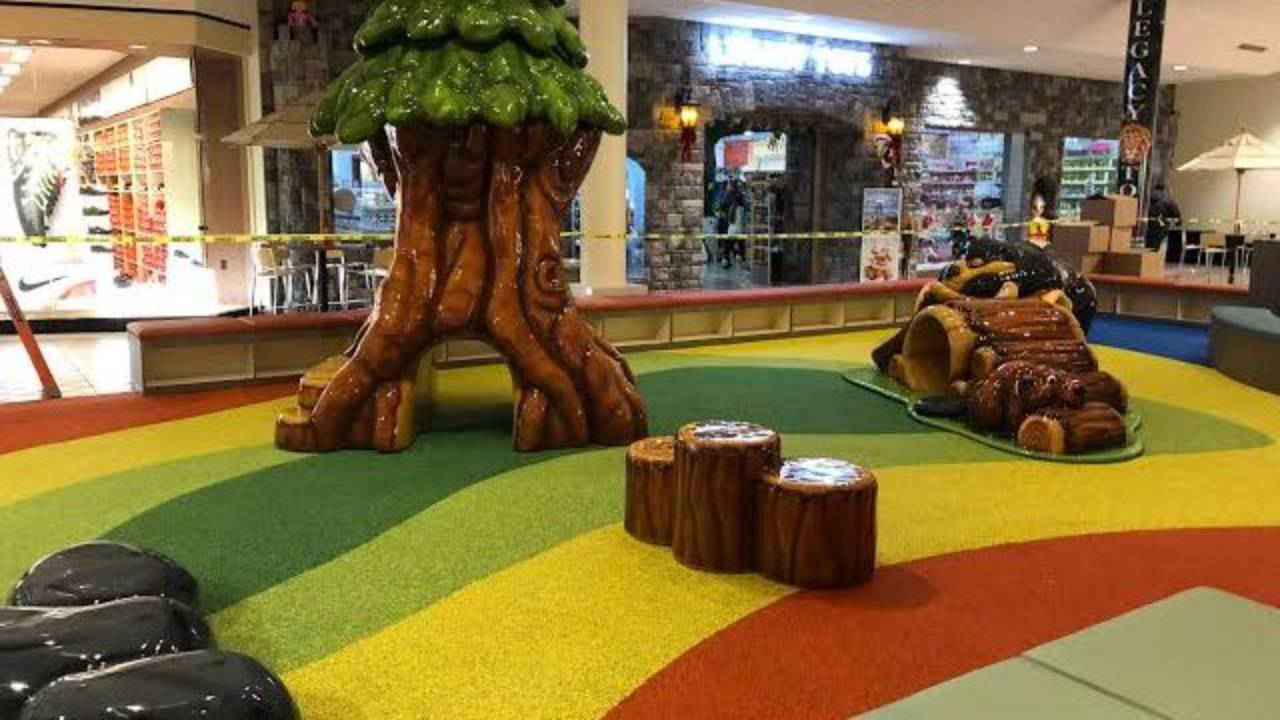
Inside Legacy Zone's expansion, multiple revenue streams, birthday party strategy, staffing model, and 22-year journey from a small dance studio to a massive family entertainment facility.
LISTEN AS A PODCAST ON SPOTIFY
When people think about opening an indoor playground or play café, they often picture a relatively small commercial space with a play structure, a few party rooms, and maybe a café. But there are so many different ways to build a successful business in the indoor play industry, and some of the most interesting examples are businesses that look nothing like the traditional play café model.
That's exactly why I was so excited to interview Janna, the owner of Legacy Zone, a massive indoor playground and family entertainment facility in North Platte, Nebraska.
Legacy Zone is part of a 35,000-square-foot operation that includes indoor play, dance, gymnastics, cheer, ninja classes, birthday parties, a café, and retail. Even more interestingly, the business operates in a relatively rural community of approximately 25,000 people, about four hours from both Omaha and Denver.
And while the facility itself is impressive, what interested me most was how Janna got there.
She didn't start with a 35,000-square-foot building or a huge team of employees. In fact, she started teaching dance classes in the children's area of a church more than two decades ago. Over time, she added programs, purchased and renovated buildings, developed a loyal customer base, and eventually purchased an old elementary school that she transformed into the home of her growing business.
During our conversation, we talked about the financial and operational realities of expanding an indoor playground, how she structures her birthday party packages, why she's a big believer in offering multiple revenue streams, and the staffing lessons she's learned over more than 20 years in business.
There are some incredibly valuable lessons here for anyone considering opening an indoor playground, expanding an existing play space, or building a business designed to last for decades.
From a Small Dance Studio to a 35,000-Square-Foot Family Entertainment Center
Janna's entrepreneurial journey began 22 years ago when she opened Legacy Dance. At the time, she was teaching classes herself, operating out of a small space in a church, and gradually building her customer base.
Over the years, she expanded beyond dance, adding gymnastics approximately a decade ago, followed by cheer and ninja programs. Today, her business serves recreational students as well as competitive dance, gymnastics, and cheer teams.
As a parent of seven children, Janna understood firsthand how difficult it can be for families to manage multiple activities, especially when siblings have different interests and schedules.
She wanted to create a place where one child could attend dance class, another could participate in gymnastics, and another could find an activity they enjoyed without requiring parents to drive all over town.
Eventually, that same philosophy led her to consider opening an indoor playground.
She noticed that while one child was participating in a class, siblings were often sitting in hallways waiting, sometimes spending that time on tablets or phones. She wanted those children to have somewhere to play, move, and stay active, even if they weren't enrolled in a structured program.
Rather than starting an entirely unrelated business, she identified an unmet need within the customer base she had already spent years developing.
This is one of the biggest takeaways from Janna's story: her expansion wasn't simply about adding another revenue stream. It was about solving an existing problem for families who were already using her business.
For indoor playground owners, this is an important distinction. Adding more services doesn't automatically make a business more profitable, particularly when those services require additional staffing, equipment, square footage, and overhead.
But when an additional offering serves the same customer base, addresses a demonstrated need, and complements existing operations, it can create opportunities for customers to spend more time and money within the same business.
Janna's indoor playground was a natural extension of the business she had already built.
Why She Purchased an Old Elementary School Instead of Leasing Commercial Space
One of the most unusual aspects of Legacy Zone is the building itself.
Before moving into her current facility, Janna had already operated out of several different locations. After starting in a church, she purchased an older church building for approximately $65,000 and renovated it for her dance studio. She eventually sold that building for a profit and moved into another location that could accommodate both dance and gymnastics.
Then an elementary school came up for auction.
Janna purchased the property and began transforming it into a facility that could accommodate her growing programs. The school's existing gymnasium became the gymnastics area, while classrooms were expanded and converted into dance studios.
She also incorporated a boutique selling dance and gymnastics apparel, shoes, and accessories, along with a café for families spending extended periods at the facility.
When she moved into the property in January 2019, the building offered approximately 24,000 square feet on five acres.
For comparison, many independent play cafés and indoor playgrounds operate in spaces measuring just a few thousand square feet. Janna's original school building was already significantly larger than the facilities many operators would ever consider.
But the property offered several advantages beyond its size.
The existing gymnasium provided space for athletic programming, the classrooms could be repurposed, and the five-acre property created opportunities for future expansion that would have been difficult to find in a more traditional commercial setting.
There were also trade-offs.
The property sits just outside North Platte's city limits, surrounded largely by fields. That means Janna doesn't benefit from the same drive-by visibility that a business located in a busy shopping center might enjoy.
Customers generally have to make an intentional trip to visit.
However, she also recognizes that finding five acres with enough space for a 35,000-square-foot facility and substantial parking in the middle of town would be extremely difficult.
This is an important consideration for anyone evaluating potential indoor playground locations. Visibility and convenience matter, but they aren't the only factors that determine whether a property can support a successful business.
Parking, ceiling heights, available square footage, permitted uses, renovation costs, and expansion opportunities can be equally important, depending on the business model.
In Janna's case, the property allowed her to create something that would have been difficult to replicate in a traditional retail location.
An unconventional approach to real estate ownership
Janna also shared something interesting about the way she structures her business and real estate.
She personally owns the building, while the operating business pays rent to her.
She views the property as part of her long-term retirement strategy, particularly because she has spent her career self-employed.
Instead of investing substantial amounts of money into improving a property owned by an unrelated landlord, she's building equity in real estate that she controls.
She explained that the equity she had accumulated in the existing property helped support the new expansion, and her goal is to have the combined property debt paid off within approximately 10 to 15 years.
Of course, purchasing commercial property isn't necessarily the best choice for every indoor playground owner. It requires access to capital, financing, and a willingness to take on the responsibilities and risks associated with property ownership.
There are also important tax, financing, and legal considerations when an operating business rents property from its owner.
But Janna's experience demonstrates why I encourage aspiring owners to think beyond their initial opening and consider how their real estate decisions might affect their business five, ten, or even twenty years down the road.
The Nearly 10,000-Square-Foot Indoor Playground Expansion
Although Janna had been thinking about an indoor playground for years, her expansion didn't happen overnight.
When she purchased the elementary school, the property included an outdoor playground. Unfortunately, Nebraska's weather and the conditions of the outdoor space made it difficult to use consistently.
Between extreme temperatures and persistent problems with stickers and other thorny plants, the playground wasn't providing the year-round experience she wanted.
That's when she began considering the possibility of moving the playground indoors.
She initially started exploring an expansion around 2020, meeting with a builder and developing plans. However, the pandemic forced her to put the project on hold.
It wasn't until the spring of 2025 that she decided to revisit the idea seriously.
In July 2025, she made a $50,000 down payment to order the buildings, officially moving the expansion forward.
The new addition measures just under 10,000 square feet, bringing the total facility to approximately 35,000 square feet.
About 25% of the new addition was allocated to additional gymnastics space, while the remaining 75% was dedicated to the indoor playground, party room, bathrooms, and related amenities.
The expansion also required significant changes to the property outside the building.
The new construction occupied what had previously been an overflow gravel parking lot, so Janna had to create additional parking elsewhere on the property. The former outdoor playground area also became part of the plan for expanded parking.
This is a great example of how an indoor playground expansion can affect far more than the interior square footage.
When planning a new building or addition, owners have to consider how construction will affect parking, traffic flow, entrances, accessibility, and the operation of the existing business.
Even when the building itself fits on the property, the surrounding infrastructure has to support the increased customer volume.
The opening timeline didn't go according to plan
Janna originally expected to receive the keys to the new building at the end of December, with hopes of opening the indoor playground in the spring.
Instead, she didn't receive the keys until the end of March.
That delay pushed the entire construction and opening schedule back, creating several stressful months as she watched her projected opening dates come and go without generating revenue from the new space.
She described the frustration of moving through May, June, July, and August while continuing to work on the buildout.
Eventually, she began testing the facility with a daycare group in late September, followed by a soft opening that allowed members and birthday party guests to experience the space while her team worked through operational issues.
Legacy Zone officially celebrated its grand opening on October 16, 2026.
At the time of our interview, the indoor playground had been officially open for approximately three weeks.
And although Janna was frustrated by the delays while they were happening, she also acknowledged that, looking back, her team had accomplished an enormous amount in a relatively short period.
For aspiring indoor playground owners, this is an important reminder that your projected opening date and your actual opening date may be very different.
Construction delays don't just affect when you can welcome customers. They can affect financing, payroll, insurance, marketing, and the amount of working capital you need to carry the business until revenue begins coming in.
One of the most common mistakes I see in business plans is assuming that the business will begin generating revenue immediately after the anticipated construction completion date, without leaving enough financial room for delays.
Janna had the advantage of an established operation continuing to serve customers while the new addition was under construction. A first-time owner without existing revenue would need to be particularly careful about planning for that possibility.
What Makes Legacy Zone Different From a Traditional Indoor Playground?
Legacy Zone isn't simply a large room filled with playhouses or a conventional soft-play structure.
Janna has created a facility designed to appeal to children of different ages, interests, and activity levels, while also incorporating features that encourage parents and older children to participate.
Some of the major attractions include:
-
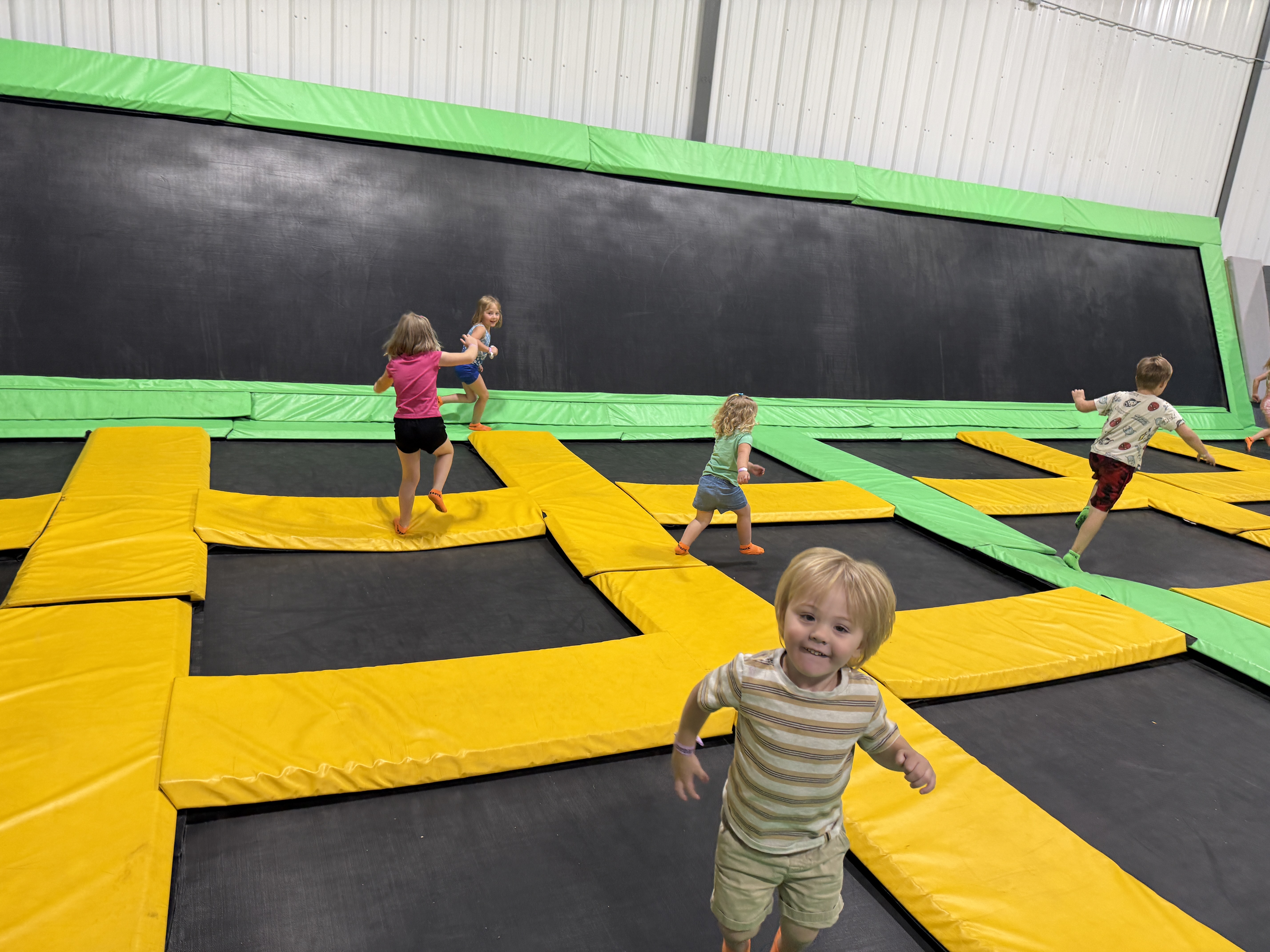
A wall featuring 18 trampolines
-
An inflatable multi-sport air court, approximately half the size of a basketball court, with basketball and volleyball options
-
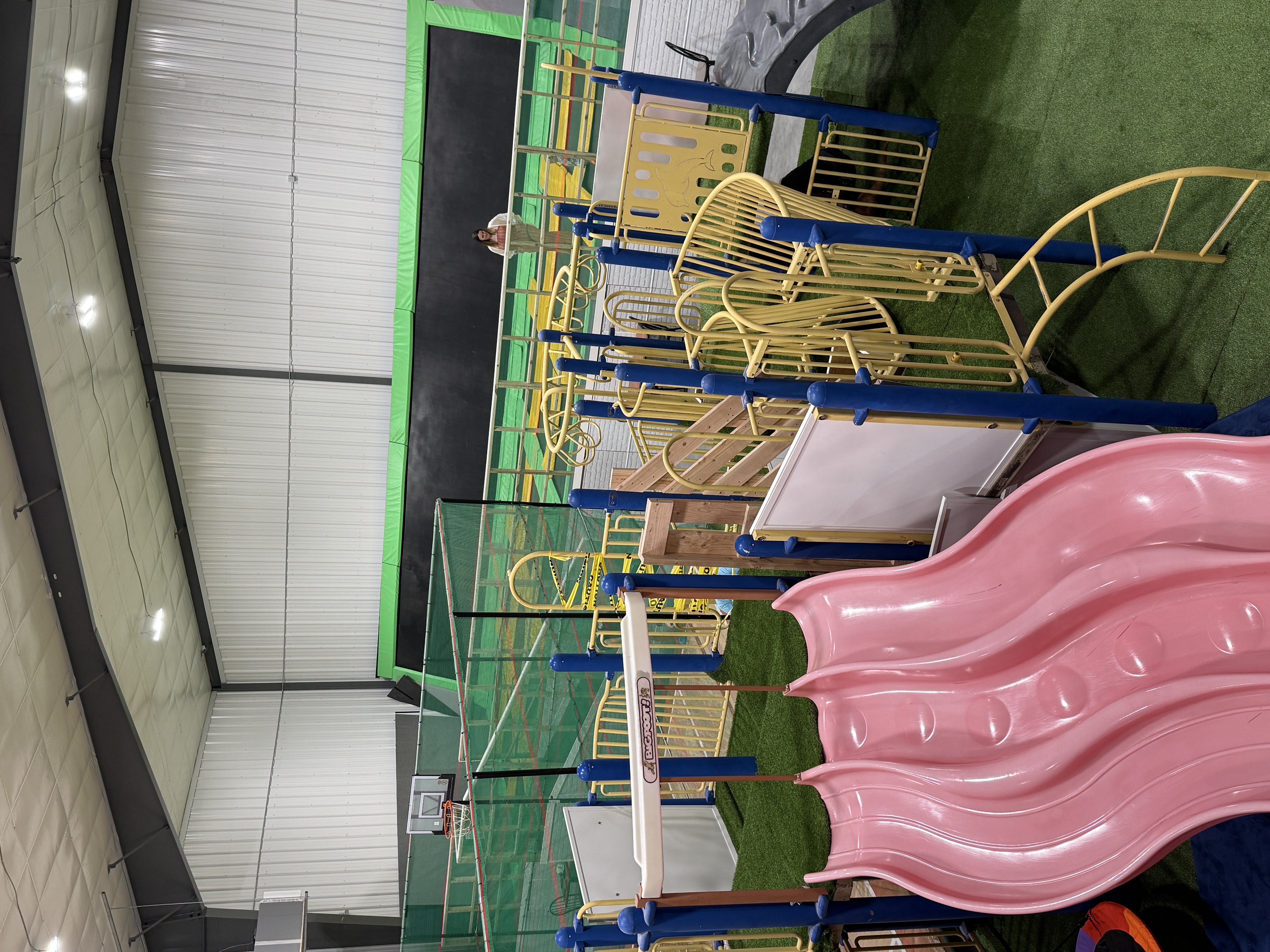
A full school-style playground relocated from outdoors
-
A dedicated sensory room
-
Built-in illuminated cubbies with pillows and books
-
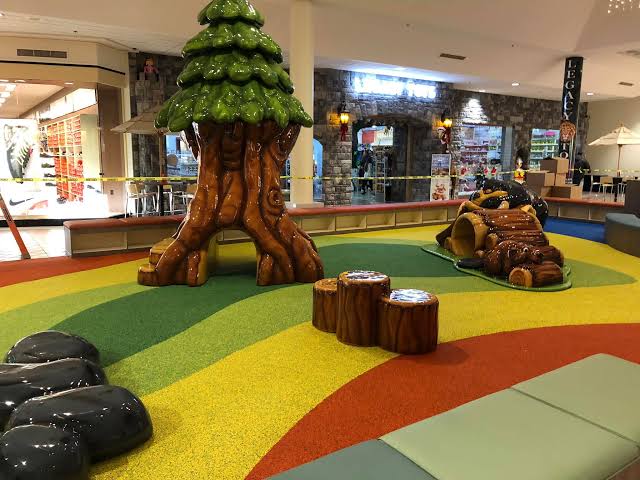
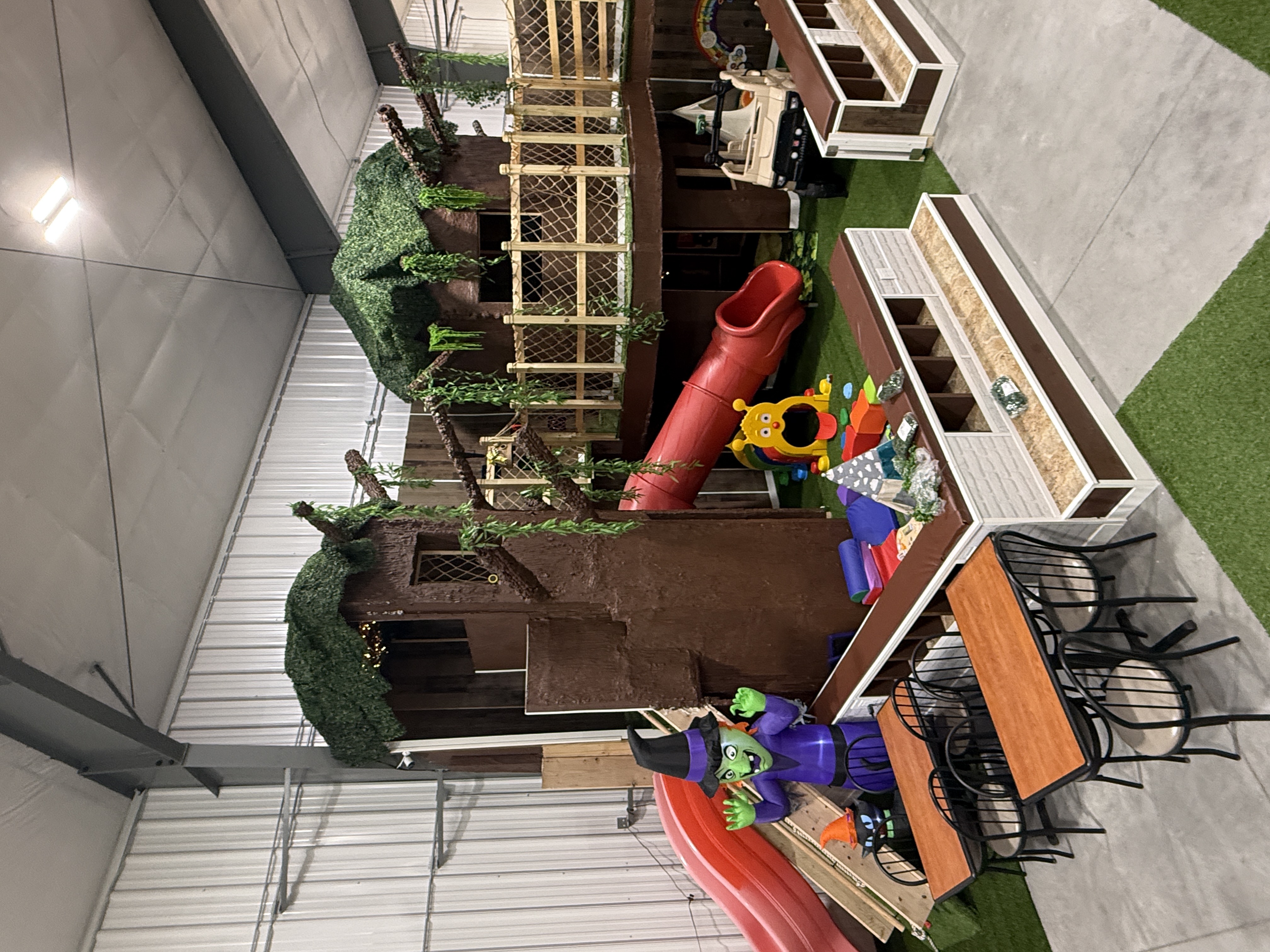
Two approximately 20-foot-tall, two-level play trees connected by a bridge
-
Toddler activities on the lower levels of the trees and activities for older children above
-
A separate infant area
Janna emphasized that she doesn't want Legacy Zone described as a trampoline park, even though trampolines are part of the experience.
Her goal was to create a broader indoor play environment rather than a facility centered on one attraction.
I also found her approach to utilizing the available square footage particularly interesting.
Despite having nearly 10,000 square feet in the new addition, she was extremely intentional about maximizing the space. The sensory room and smaller reading areas are integrated into portions of the building that might otherwise have been underutilized.
The two-level play trees also allow her to accommodate different age groups vertically rather than dedicating separate large areas of floor space to every activity.
This is a valuable lesson for operators working with much smaller facilities, too.
The goal isn't necessarily to fit the greatest number of attractions into a building. It's to make the available square footage work as effectively as possible for the customer experience and the business model.
An indoor playground with a thoughtful layout, appropriate age separation, and complementary activities can often provide a better experience than a larger space that hasn't been designed with customer flow and utilization in mind.
Opening an Indoor Playground in a Town of Just 25,000 People
One of the reasons I wanted to interview Janna was because her market is so different from the larger suburban and metropolitan areas where many of my clients operate.
North Platte has a population of approximately 25,000 people, with smaller rural communities throughout the surrounding area.
That creates an interesting challenge for a facility of Legacy Zone's size.
On one hand, Janna has limited access to the large population base that many indoor playground business plans rely on when estimating open-play attendance and membership potential.
On the other hand, she already had an established business serving local families, and there are relatively few comparable entertainment options in her immediate area.
She also hopes that Legacy Zone will eventually attract families traveling between Omaha and Denver who are looking for somewhere to stop, take a break, and let their children play.
But at the time of our conversation, her immediate priority was simply increasing awareness that the indoor playground existed and was open to the entire community.
The challenge of marketing a destination business
Janna explained that one of her biggest early challenges was getting the word out.
Because the facility is located outside town, people aren't necessarily discovering it while driving past. She had been relying heavily on Facebook, but recognized that not everyone in the community uses the platform or regularly sees her posts.
Traditional advertising options also presented challenges, as local consumers don't necessarily rely on radio and newspapers the way they once did.
Another unexpected obstacle was confusion about who could use the indoor playground.
Because Legacy Zone was associated with the long-established Legacy Dance and Gymnastics business, some families assumed that children had to be enrolled in classes to visit.
Janna has had to repeatedly clarify that the playground is open to everyone, regardless of whether they participate in her other programs.
This is a really important marketing lesson for businesses that expand into new services.
Existing brand recognition can be an enormous advantage, but it can also create assumptions about what your business offers and who it's designed to serve.
When introducing a new revenue stream, it's not enough to announce that it exists. You have to clearly communicate who it's for, how it works, and why people should visit.
Why birthday parties have become one of her best marketing tools
Janna has already noticed that birthday parties are particularly valuable for introducing new families to the facility.
When one family books a birthday party, they may bring 12, 15, or 20 additional guests into Legacy Zone, many of whom might not have visited otherwise.
Those guests get to experience the facility firsthand, see the attractions, and potentially consider returning for open play, memberships, or their own birthday celebrations.
This is something I talk about frequently with indoor playground owners because birthday parties can serve two purposes simultaneously.
They're a high-value revenue stream, but they're also an opportunity to introduce your business to a concentrated group of potential future customers.
For a destination business like Legacy Zone, where casual walk-in discovery is limited, that exposure is especially valuable.
However, owners still need a strategy for turning that first visit into a repeat visit. Collecting appropriate customer information, making future offerings easy to discover, and creating an excellent experience are all important parts of maximizing the value of birthday party traffic.
Legacy Zone's Membership Strategy and Early Results
At the time of our interview, Legacy Zone had already sold approximately 25 family memberships within its first few weeks of operation.
Janna's immediate goal was to reach 50 memberships, with a longer-term target of approximately 100 families.
Most of the initial members were already connected to Legacy Dance and Gymnastics, although she was encouraged to see families without any previous connection to the business purchasing memberships as well.
I think this is an important example of how an established customer base can reduce some of the uncertainty associated with launching a new service.
Janna didn't have to introduce an entirely unfamiliar business to the community. She already had relationships with families who trusted her and were familiar with the facility.
That gave her confidence in the expansion before the indoor playground even opened.
However, it's also important to recognize that those existing relationships don't guarantee that the new revenue stream will be successful.
Customers still have to see enough value in the membership to purchase it, use it, and continue renewing it.
With only a few weeks of operating history at the time of our conversation, it was far too early to evaluate long-term membership retention or determine what percentage of Legacy Zone's revenue would eventually come from recurring memberships.
The more useful lesson here is the value of establishing realistic milestones and monitoring how the membership base develops over time.
For an indoor playground owner, I would want to look at membership acquisition, cancellations, average visit frequency, member spending on food and beverages, and the effect memberships have on overall capacity.
Those metrics become especially important when memberships are offered alongside multiple other revenue streams.
How Legacy Zone Structures Its Birthday Party Packages
One of my favorite parts of our conversation was hearing how Janna reworked her birthday party offerings for the new indoor playground.
She had already been hosting gymnastics birthday parties for years, but admitted that she hadn't meaningfully updated her party model in approximately eight years.
Previously, families could book a private gymnastics experience that included an obstacle course, foam pit, trampoline activities, and time for cake and presents.
With the addition of Legacy Zone, she saw an opportunity to offer several different party experiences at different price points.
And rather than treating every party as essentially the same product, she created options that take advantage of the different areas of her facility.
Classic birthday party — $350
The classic party takes place in Legacy Zone and includes a structured two-hour experience.
Guests receive 45 minutes of playtime, followed by 30 minutes in the party room for cake and presents, and then another 45 minutes of playtime.
The package also includes the required grippy socks.
Families handle their own party decorations and setup, making this the more basic option.
One particularly smart operational detail is that guests receive a colored wristband allowing them to continue playing after their scheduled party time, even though they must vacate the party room so it can be reset for the next group.
This separates the time-sensitive party room reservation from the more flexible play experience.
For operators with limited party room capacity, that distinction can be extremely valuable.
You can maintain a consistent party schedule without necessarily requiring every guest to leave the building immediately after their reservation ends.
Of course, that model only works when the play area's capacity and staffing can accommodate guests remaining longer.
Private gymnastics birthday party — $420
The private gymnastics party builds on the experience Janna had already been offering for years.
Families receive private gymnastics time, use of the café-side party area for cake and presents, and then access to Legacy Zone afterward.
At $420, this package is only $70 more than the classic party.
Janna considers it an excellent value because families receive both the private gymnastics experience and the indoor playground.
From an operational standpoint, this package is particularly interesting because it uses a different portion of the facility.
Legacy Zone has one main party room, but the gymnastics side also has an area that can be used for parties.
That means Janna can potentially host a classic indoor playground party and a private gymnastics party simultaneously without requiring both groups to use the same party room.
This is a great example of maximizing existing infrastructure to increase birthday party capacity.
Private Legacy Zone party — $600
For families who want exclusive use of the indoor playground, Janna offers a private party option for $600.
However, this package is only available on Saturdays from 10 a.m. to noon.
I particularly like that she has limited private rentals to a specific time slot rather than allowing families to book exclusive access throughout the entire weekend.
Private events can generate attractive revenue, but they also displace other potential customers.
For an indoor playground with memberships, drop-in play, and multiple revenue streams, closing the entire facility for private parties can create problems if those reservations interfere with regular customers.
By limiting the private party option, Janna can offer an exclusive experience without allowing it to dominate the operating schedule.
The $350 VIP Birthday Party Upgrade That Nearly Doubled One Booking
Perhaps the most interesting birthday party decision Janna made was introducing a VIP upgrade.
She told me that after going through my training and learning more about premium birthday party offerings, she decided to test a package that would appeal to a very specific type of customer.
Rather than trying to make every birthday party customer purchase an expensive package, she thought about a family she already knew and what that family might value.
She created a VIP add-on priced at $350, which includes a collection of services and decorations designed to make the party as convenient as possible.
The package includes items such as a balloon arch, birthday banner, table settings, goodie bags, and other decorations, with the staff handling setup and helping the family gather their belongings afterward.
Essentially, the family can arrive, enjoy the party, and leave without having to manage all the little details themselves.
And the very first family to book a birthday party was the family Janna had in mind when creating the package.
They booked the $420 private gymnastics party and added the $350 VIP upgrade, bringing the booking total to approximately $770.
That's an additional $350 in revenue from a single reservation, without requiring another party room or an entirely separate event.
Janna shared that she had already sold a couple more VIP upgrades during the first few weeks.
She doesn't expect every family to purchase one, and that's exactly the point.
A premium party package doesn't have to be your most popular option to be worth offering.
If a small percentage of customers are willing to pay significantly more for convenience, customization, and a more complete experience, that can increase your average birthday party booking value.
The key is making sure the upgrade is priced appropriately relative to the actual cost of decorations, supplies, labor, and preparation.
An additional $350 in revenue isn't the same thing as an additional $350 in profit, but when the package is designed and priced carefully, premium upgrades can become a valuable contributor to party profitability.
I also love that Janna didn't spend months trying to develop the perfect VIP offering.
She identified a customer, created a package around that customer's preferences, put a price on it, and allowed the market to respond.
That's a much more useful approach than assuming no one in your market will pay for a premium experience without ever testing the demand.
How Many Birthday Parties Can a Large Indoor Playground Host?
Janna has designed a birthday party schedule that allows her to offer multiple parties throughout the weekend.
Her Saturday schedule includes a private Legacy Zone option from 10 a.m. to noon, followed by classic party reservations from 12:30–2:30 p.m., 3–5 p.m., and 5:30–7:30 p.m.
She can also accommodate a private gymnastics party from 3:30–5:30 p.m., using the separate gymnastics area.
On Sundays, she offers a similar schedule without the private Legacy Zone rental, and she recently added a Friday evening party option from 5–7 p.m.
In total, she estimated that the facility could accommodate approximately 10 birthday parties per weekend if all available slots were booked.
However, her immediate goal is much more conservative: consistently booking four to five parties per weekend.
That distinction is important.
Maximum capacity tells you what the facility could potentially accommodate. It doesn't tell you what the market will actually demand or what the business can consistently deliver.
For someone evaluating the financial potential of an indoor playground, I would always recommend separating maximum party capacity from realistic booking projections.
At four to five parties per weekend, Legacy Zone would be hosting approximately 208 to 260 parties annually if that pace were sustained throughout the year.
At the $350 classic party price, that represents a theoretical $72,800 to $91,000 in annual gross party revenue before upgrades or higher-priced packages.
That isn't a forecast of Legacy Zone's actual performance, and it doesn't account for seasonality, cancellations, package mix, or operating expenses. It simply illustrates why birthday parties can be a meaningful revenue stream even without booking every available slot.
And for Janna, parties also introduce new families to the facility, creating potential opportunities for future memberships, drop-in visits, and café purchases.
Staffing a 35,000-Square-Foot Business With Multiple Revenue Streams
Staffing was another major topic during our interview, particularly because Legacy Zone operates alongside an established dance and gymnastics business.
One of the biggest challenges with traditional dance and gymnastics programs is that most classes take place after school.
Janna explained that many of her classes run from approximately 4–8 p.m., Monday through Thursday.
Even someone working every available hour during those times would only accumulate about 16 hours per week.
That makes it difficult to build a traditional full-time staffing structure around recreational classes alone.
Some of her competitive gymnastics coaches are salaried and work more substantial hours, including weekend practices, competitions, and travel. But many other instructors work part-time, sometimes alongside full-time jobs elsewhere.
When Janna first considered opening Legacy Zone, she assumed she would need to hire an entirely new group of employees.
Then she realized she already had a substantial pool of people who knew her business, understood how to work with children, and had demonstrated that they were reliable.
Cross-training existing employees
Instead of immediately hiring an entirely separate team, Janna approached existing staff members who she thought would be a good fit for the indoor playground.
She asked whether they wanted additional hours, particularly on weekends when they weren't already teaching classes.
This allowed her to staff much of the new operation using employees she already trusted.
It also gave those employees an opportunity to earn additional income without requiring them to find another part-time job.
Of course, cross-training doesn't eliminate every scheduling challenge.
During weekday evenings, many of those employees are already teaching classes, which means they can't simultaneously work in Legacy Zone.
Janna has hired a few additional employees to help cover those gaps, including people with previous connections to her business.
Her husband also helps cover some evening shifts.
Another challenge is competition season, when coaches and staff members may be traveling to events in different cities or states.
Because dance and gymnastics competitions can overlap, there may be weekends when multiple employees are unavailable at the same time.
Janna knows she'll need to continue developing her staffing coverage as the business grows.
For owners operating multiple revenue streams, this is a good reminder that cross-training is valuable, but it needs to be paired with thoughtful scheduling and contingency planning.
An employee who is trained to work in three departments is only useful in one place at a time.
Why she hires for personality before experience
Janna also shared one of the hiring philosophies that has guided her for years.
She prioritizes three qualities when evaluating potential employees: friendliness, an ability to connect with children, and reliability.
Her belief is that she can teach someone how to perform many of the technical responsibilities associated with the job, but it's much harder to teach someone to be pleasant, welcoming, and genuinely good with families.
That philosophy applies to her gymnastics coaches, dance instructors, café employees, and indoor playground staff.
She described how parents sometimes request particular coaches because their children have developed such positive relationships with them.
The same thing happens in her café, where customers ask for a specific employee because they enjoy interacting with her and appreciate the way she prepares their orders.
Janna recognizes that the relationship is often just as important as the product or service being delivered.
I think this is especially relevant in the indoor playground industry, where customer experience can be one of the biggest factors separating successful businesses from competitors.
Customers may initially visit because of your equipment, facility, or location, but the interactions they have with your staff can strongly influence whether they return.
And when employees consistently create positive experiences, those relationships can become a meaningful part of the business's competitive advantage.
The Difficult Employee Decision That Reinforced Her Standards
Janna also shared an experience involving a highly skilled instructor who ultimately wasn't the right fit for her business.
The employee had extensive training and was an exceptionally talented tap dancer and teacher.
However, his approach to interacting with children reflected older coaching practices that didn't align with the standards Janna wanted to maintain.
She had several conversations with him about the way he spoke to students and the changes she needed to see.
Eventually, they agreed to part ways.
Janna described the decision as one of the most difficult staffing experiences she'd had, particularly because the employee was extremely talented and her own children had benefited from his instruction.
But she also recognized that allowing the behavior to continue could negatively affect the students and the business.
This is an important leadership lesson for owners who rely heavily on specialized employees.
Technical skill is valuable, but it doesn't outweigh the need for employees to uphold your standards, especially when working with children.
Sometimes the most talented person on your team isn't the person who should remain on your team.
Janna's willingness to make that decision, despite the personal difficulty, says a lot about how seriously she takes the experience families have at her facility.
Finding Employees in a Small Town
Operating in a smaller market creates additional staffing challenges.
Janna explained that traditional hiring platforms haven't always been particularly effective for her.
Instead, much of her recruiting happens through existing relationships and people who are already familiar with the business.
She keeps hiring flyers displayed in the facility, even when she isn't actively trying to fill a particular position.
If someone with relevant experience or potential expresses interest, she makes an effort to learn more about them rather than automatically turning them away because the current schedule is full.
One of her most successful hires was a former collegiate gymnast who contacted her after moving to the area. Janna found a position for her, and the employee has remained with the business for years.
This approach gives Janna access to potential employees before an urgent staffing need arises.
For indoor playground owners, particularly those in smaller communities, maintaining relationships with potential future employees can be just as important as recruiting when a position becomes vacant.
Former customers, older students, parents, and community members may all become valuable sources of talent.
The challenge is developing a process that allows you to identify and train those people without creating unnecessary payroll expenses.
Why Janna Believes a Café Belongs in Her Business Model
Although Legacy Zone has several substantial revenue streams, Janna is also a strong believer in offering food and beverages.
Her original café wasn't created specifically for the indoor playground.
It was developed to serve dance and gymnastics families who often spend several hours at the facility.
Because the building is located outside town, families don't have convenient access to nearby restaurants or coffee shops.
Parents may be waiting through multiple classes, and children may need snacks or meals between activities.
Janna wanted to provide those conveniences without forcing families to leave.
She even described parents ordering pizzas to be ready when their children's classes ended, allowing them to pick up dinner before heading home.
Although the café hasn't historically been her largest revenue stream, she believes it has paid for itself and added significant value to the overall business.
And she expects its revenue potential to increase as Legacy Zone becomes more established.
How memberships may encourage café spending
One observation Janna made during the first few weeks of operating Legacy Zone was that members seemed particularly willing to purchase food and beverages.
Because those families had already paid for their memberships, they weren't paying an admission fee every time they entered the building.
As a result, purchasing a drink, snack, or pizza could feel like a smaller additional expense during their visit.
She also noticed how food purchases can influence other customers.
When one family orders a pizza, nearby customers may notice the food and decide to order something themselves.
It's a simple example of how food and beverage sales can develop organically when customers are spending extended periods in a facility.
However, at the time of our conversation, Janna also acknowledged that some customers were so excited by the playground that they hadn't even noticed the café.
She expects that to change as families become more familiar with the facility.
This is something I would encourage other operators to pay attention to as well.
Simply having a café doesn't guarantee customers will use it. Menu visibility, signage, ordering convenience, product selection, and staff recommendations can all influence café sales.
Keeping the café operationally manageable
Janna's café offerings include pizzas, chicken strips, mini corn dogs, snacks, loaded teas, and dirty sodas.
She hasn't yet developed a significant coffee program, although she is interested in exploring that opportunity.
One of the ways she manages café labor is by cross-training employees working in Legacy Zone to prepare food and beverages rather than automatically assigning a separate employee exclusively to the café.
This allows her to offer another revenue stream without necessarily adding an entirely separate layer of staffing for every shift.
That doesn't mean the café requires no additional labor or operating costs. Employees still need training, food safety procedures, preparation time, and the ability to manage orders alongside their other responsibilities.
But Janna has intentionally built the café into her broader staffing model rather than treating it as an unrelated business.
I think this is one of the most useful lessons from her approach to diversification.
Additional revenue streams are most valuable when they complement your existing operation rather than requiring you to build a completely separate business inside your business.
For Janna, the café supports longer visits, provides convenience for families, and creates additional opportunities to generate revenue from customers who are already on site.
Why Growing Slowly Was One of Her Most Important Business Decisions
Toward the end of our interview, I asked Janna what advice she would give someone who hopes to build a business that lasts more than 20 years.
Her response centered on the importance of not growing faster than the business can support.
She explained that people sometimes look at her current facility and assume that's the kind of operation they should build from the beginning.
But they don't always see the two decades of work that went into creating it.
For the first seven years of her dance studio, Janna was the only teacher.
She choreographed and taught every routine, knew every student, and handled nearly every aspect of the business herself.
She didn't immediately hire a large staff or attempt to operate at the scale she eventually hoped to reach.
Instead, she gradually expanded as the business developed enough revenue and stability to support additional expenses.
She also acknowledged that she went a long time without taking a traditional paycheck. Because her family lived on site, the business covered certain household expenses, which helped make that arrangement possible.
That was a very specific financial situation, and it isn't necessarily one that other entrepreneurs could or should replicate.
But the underlying lesson is still important.
Every additional employee, department, and square foot creates financial obligations that have to be supported by the business.
Hiring employees before the revenue exists to support them can create significant financial pressure, particularly for a new business that hasn't yet established consistent demand.
Janna also emphasized the importance of being willing to perform the work yourself, especially in the early stages.
She believes owners should understand the responsibilities involved in operating their businesses and be prepared to step into different roles when necessary.
Of course, as businesses grow, effective delegation becomes essential. Owners can't realistically perform every task forever, particularly in a facility of Legacy Zone's size.
But understanding the work gives owners a stronger foundation for hiring, training, and evaluating employees as the business develops.
Building a foundation before taking on additional risk
Janna described one of the first major risks she took when expanding into gymnastics.
Unlike dance, which she had been teaching herself for years, gymnastics required specialized coaches.
For the first time, she was adding a major component to the business that she couldn't personally operate on her own.
That made her dependent on employees in a way she hadn't previously experienced.
However, by that point, she had already spent approximately a decade building her business.
She understood her customer base, had operational experience, and felt more comfortable taking on the additional risk.
This is such an important distinction for anyone considering opening a large indoor playground or family entertainment center with multiple offerings.
It's possible to launch several revenue streams simultaneously, but doing so means managing multiple operational challenges from the beginning.
Each offering may require its own equipment, staffing, training, scheduling, marketing, and customer service processes.
Janna didn't have to figure all of those things out at once.
She added new components over time, building on the foundation of the existing business.
And while her approach isn't the only way to grow successfully, it's a useful example of how incremental expansion can reduce some of the uncertainty associated with introducing new services.
What Indoor Playground Owners Can Learn From Legacy Zone
There are several lessons from Janna's experience that I think are particularly valuable for both aspiring and existing indoor playground owners.
1. Diversification should be intentional
Legacy Zone offers a wide variety of activities and services, but those offerings weren't added randomly.
Dance, gymnastics, cheer, ninja, indoor play, birthday parties, retail, and food and beverages all serve overlapping customer groups.
That creates opportunities for cross-promotion, shared staffing, and increased spending from families already visiting the facility.
Before adding a new revenue stream, consider whether it solves a problem for your existing customers and whether the potential revenue justifies the additional complexity.
2. Existing customers can make expansion less risky
Janna already had a loyal base of dance and gymnastics families before opening Legacy Zone.
That didn't eliminate the risk associated with her expansion, but it gave her an audience to introduce the new service to and helped validate the opportunity.
For existing play café owners, this is why customer feedback, utilization data, and purchasing patterns should play such a significant role in expansion decisions.
Your current customers can provide valuable clues about what they would actually use and pay for.
3. Birthday parties are both a revenue stream and a customer acquisition opportunity
Legacy Zone's birthday party strategy is designed to generate revenue while introducing additional families to the facility.
Janna also uses multiple package options to serve different customer preferences and maximize the use of her existing spaces.
Owners should evaluate not only how many parties they can host, but also their average booking value, upgrade revenue, labor costs, and the number of new customers those parties introduce to the business.
4. Premium upgrades are worth testing
The $350 VIP birthday party upgrade is a great example of identifying a customer who values convenience and creating an offering around that preference.
Not every customer will want to spend that much, and that's fine.
Premium options can increase revenue without requiring every customer to purchase them.
The important thing is to price those offerings based on their costs and value rather than assuming customers in your market won't pay for them.
5. Cross-training can create operational efficiencies
Janna has been able to staff much of her new indoor playground using employees from her existing dance and gymnastics operation.
That approach helps her make better use of trusted employees while offering additional working hours.
However, it also requires careful scheduling, especially when classes, competitions, and playground operations overlap.
Cross-training works best when it's supported by clear expectations, consistent procedures, and sufficient staffing coverage.
6. Real estate decisions can affect long-term profitability
Purchasing and renovating an old elementary school gave Janna access to space and expansion opportunities that would have been difficult to find in a traditional commercial location.
Her ownership structure also allows her to build equity in the property.
But the location creates marketing challenges, and the expansion required additional parking and infrastructure improvements.
There are always trade-offs, which is why owners need to evaluate properties based on the full business model rather than square footage or rent alone.
7. Sustainable growth matters more than impressive growth
Perhaps the biggest lesson from Janna's story is that the business she operates today took 22 years to build.
She didn't start with a massive facility, dozens of employees, or multiple departments.
She started with a service she could personally provide, developed a customer base, and expanded as opportunities became financially and operationally realistic.
It's easy to look at a 35,000-square-foot facility and focus on the size, equipment, and number of offerings.
But what makes Janna's story particularly valuable is the foundation underneath all of it.
Final Thoughts on Building a Sustainable Indoor Playground Business
What I appreciate most about Janna's experience is that she hasn't approached growth as something that needs to happen as quickly as possible.
She's spent more than two decades building relationships with families in her community, developing programs, improving her facilities, and creating new opportunities as her business has evolved.
And now, with Legacy Zone officially open, she's entering another new phase.
At the time of our interview, she was still working through the realities of operating the indoor playground, building membership volume, promoting birthday parties, introducing customers to the café, and refining her staffing structure.
There are still plenty of unknowns, and it will be interesting to see how the business performs once it has a full year of operating history.
But I think that's what makes this conversation especially valuable.
We weren't just talking about a finished business or looking back at a success story years after everything had been figured out. We were discussing a major expansion during its first few weeks of operation, with all the excitement, uncertainty, and operational challenges that come with it.
And for anyone considering opening or expanding an indoor playground, that's a perspective worth hearing.
You don't have to build your dream business on day one. You need to build a business that can support the next stage of growth.
Janna's journey from teaching dance classes in a church to operating a 35,000-square-foot family entertainment facility is a powerful example of what can happen when growth is supported by experience, customer relationships, and a willingness to adapt.
Listen to the Full Interview With Janna of Legacy Zone
In this episode of The Profitable Play Podcast, Janna shares more about her 22-year entrepreneurial journey, her experience converting an elementary school into a family entertainment facility, the challenges of her recent expansion, and the lessons she's learned managing multiple revenue streams.
We also dive deeper into her birthday party packages, staffing philosophy, café operations, and what she's learning during Legacy Zone's first weeks in business.
Whether you're planning your first indoor playground, considering adding new revenue streams, or exploring a larger facility, I think you'll find this conversation incredibly valuable.
Follow Legacy Zone on Facebook to see more of the facility and follow along as the business continues to grow.
About The Author

Michele Caruana
Play Cafe Academy Founder & Blog Author
I have over a decade of hands-on local business experience and tough lessons under my belt, and I am passionate about helping current and prospective play based business owners AVOID the same mistakes myself and SO many other business owner's make. Even though I have a Master's Degree in Economics and Years of Business and Marketing experience, it took me YEARS to "crack the code" and turn my Indoor Playground from an expensive hobby into a business-- and I want to get YOUR business get there in less time and with much less stress.
Categories
All Categories