
If I Could Go Back to 2016: The Advice I’d Give Myself After My First Full Year Open
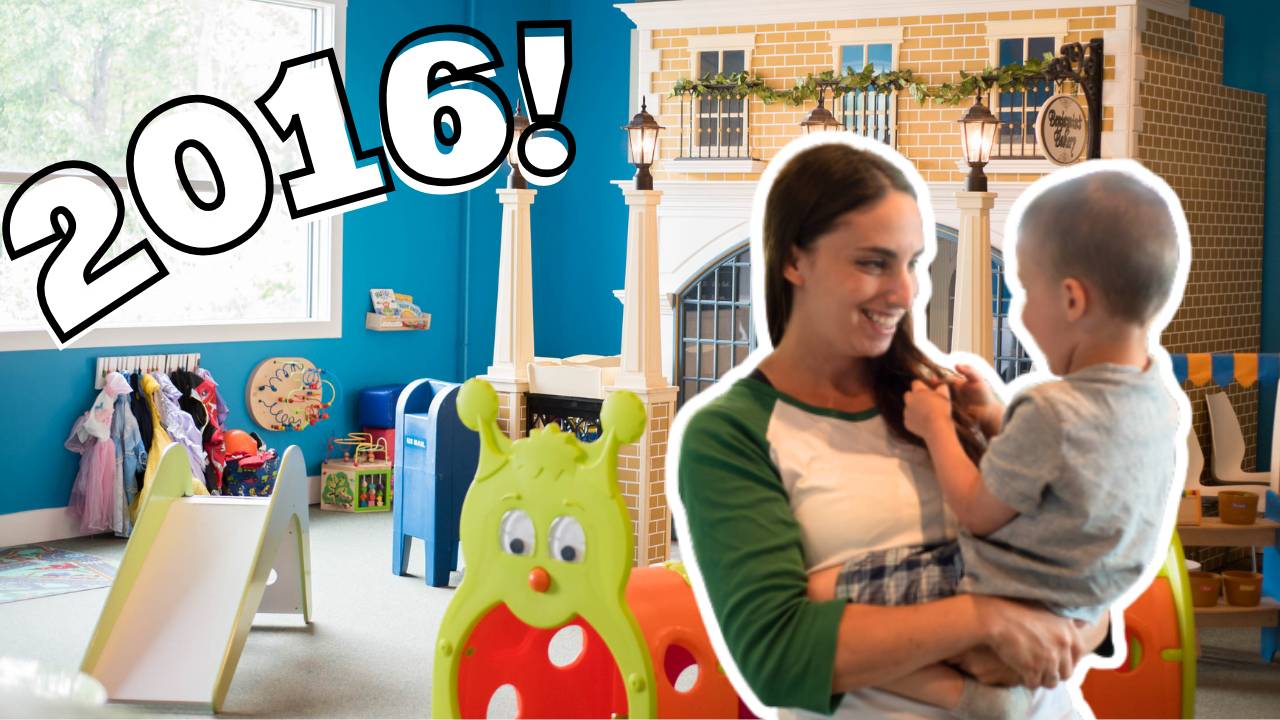
There’s a trend going around right now where people are throwing it all the way back to 2016 and reflecting on what life looked like then versus now.
And the second I saw it, I knew I had to do it—because 2016 was my first full calendar year owning a play café (we opened in 2015), and I was going through it.
I hadn’t figured everything out yet. I was hitting roadblock after roadblock, failure after failure, and I didn’t have a real community of other owners I could lean on. Not the “everyone’s crushing it” highlight reel kind of community—but a transparent, safe space where people shared what was actually working, what was failing, and what they’d do differently.
On top of that, I was pregnant for most of 2016, and it was a difficult pregnancy compared to my first. I gave birth at the end of November, and the birth was traumatic. After that came almost daily medical appointments into 2017.
It was a year of extremes: beautiful memories mixed with very real stress, isolation, and pressure. I can still picture my toddler spilling brochures all over the floor, climbing onto counters, eating snacks behind the café counter, and “talking on the café phone” while I checked people in—because I didn’t have a local support system, and I was doing whatever I had to do to keep things moving.
So if you’re in your first year open and you feel like you’re failing more than you’re winning, this is for you.
And if you’re pre-opening? You’re in an even better place—because you can avoid a lot of the expensive mistakes I didn’t know were mistakes until years later.
Here’s what I’d go back and tell my 2016 self.
1. Stop Throwing Good Money After Bad
This is a phrase my husband said to me approximately 10,000 times in my first two years, and I wish I’d listened sooner.
In 2016, I was trying everything other owners were doing—and I couldn’t understand why it wasn’t working for me. So my solution was… to try harder. Spend more. Promote more. Force it.
But eventually I had to face the truth:
Some offers won’t work in some spaces—no matter how much money you throw at them.
Not because you’re bad at business. Not because you’re “not marketing hard enough.” But because of realities like:
-
your layout
-
your square footage
-
your demographics
-
your location
-
your equipment and age range
-
your lack of separate rooms
-
what your community actually wants
For example: I didn’t have a party/class/flex room in my first location. So I tried to run classes during open play. I tried to do coworking. I tried to add offers that sounded great in theory—but the experience was messy, chaotic, and frustrating for customers.
And I kept thinking, “Maybe I just haven’t found the right audience.”
No. The offer didn’t fit the space.
Here’s the easiest way I can describe it: it was like wearing the wrong dress for your body shape and spending months wondering why it looks amazing on the model but terrible on you. The problem isn’t you. The problem is the fit.
I also learned this the hard way with summer camps. We tried to run morning camps alongside open play and afternoon camps while closed. The afternoon camps were smooth, safe, and enjoyable. The morning camps? Chaos. Especially on rainy days.
And when we built our first licensed location later, I made it non-negotiable: the space had to have a party/flex room. I literally put it into the contract.
Because without it, you’re not just limited—you’re constantly trying to force a business model your layout can’t support.
So my advice to 2016 me:
Stop forcing offers that don’t fit. Figure out what does work in your space and lean into your strengths.
2. Throw Away Your Business School Textbooks
I have a master’s degree in economics, and in 2016 I was still married to the idea that my business should operate the way I learned businesses “should” operate.
But the indoor playground/play café industry is nuanced. It’s often counterintuitive. And it is absolutely not like most brick-and-mortar businesses.
I was clinging to what I thought I knew instead of accepting that I needed to start from scratch.
That’s why I tell people all the time: if you’re opening an indoor play space, don’t just hire a general business coach. Hire someone who understands this industry—because there are operational realities here you will not see coming if you’re applying generic advice.
Back then, there weren’t many people teaching this. There weren’t many resources. So yes, I had to reinvent the wheel.
But I wish I’d accepted that sooner, instead of fighting reality and making everything harder than it needed to be.
3. Stop Obsessing Over Competition and Copycats
In 2016, I found out that three separate former customers were opening three separate play cafés—each within about 15 minutes of my business.
I was pregnant, exhausted, overwhelmed, and I panicked.
I spent nights sobbing to my husband, convinced my dream was going to disappear the second those businesses opened.
Here’s what actually happened:
-
Two of them copied me pretty directly… and closed within 6–8 months.
-
The third was genuinely great—and we coexisted just fine for years. We even collaborated.
But in the moment, I wasted so much time doing the 2:00 a.m. doom-scroll:
their websites, their pricing, their offerings, their posts, their everything.
I wish I could go back and shake myself and say:
Redirect that energy into making your business the best version of itself.
And even more specifically, I would’ve told myself to focus on revenue streams that don’t require massive volume.
Because here’s what people forget when they panic about competition:
You don’t need the entire city to choose you.
At our peak, we only needed to book 150–200 birthday parties per year to hit our goals. That’s not “everyone.” That’s a small number of families saying yes.
And with memberships, we only needed around 100 active members to cover fixed costs and pay myself as an owner.
So instead of obsessing over open play volume dips every time a new business opens, I wish I had doubled down earlier on:
-
birthday parties
-
memberships
-
trust-building relationships
-
a consistent customer experience
Competition is loud. Focus is louder.
4. Ease Up on the Expectations You Put on Your Kids
This one still hits me.
In 2016, my oldest was a very young toddler. My second son wasn’t born until November. And I was bringing my toddler to work constantly—because I didn’t have a support system locally, and I was in survival mode.
But I also had completely unrealistic expectations of him.
Big emotions, frustration, messes, chaos—he was a toddler doing toddler things.
I was the one putting him into environments that were stressful for both of us: during business hours, around customers, when I was already overstimulated, exhausted, and working with a low boiling point.
He took almost all of his naps that year strapped to my back while I worked. And if I’m being brutally honest, I look back now and wonder how much my own health would’ve improved if I’d slowed down sooner.
If I could go back, I’d tell myself:
Let yourself have slow mornings. Let your kid be a kid. Stop forcing him into situations that stress both of you out.
Because when you’re in the thick of it, you convince yourself you have no choice.
But most of the time, you do have choices—you just can’t see them yet.
5. Your Team Needs Leadership (Not Just Tasks)
In 2016, my team was my last priority—and I regret that.
I treated staff like “warm bodies”: hire them, tell them what to do, hope it gets done, and move on.
But what I didn’t understand yet was this:
If you run a business like this, a huge percentage of your job is leading people.
Not talking to customers.
Not doing “fun owner stuff.”
Leading.
Training. Communication. Culture. Expectations. Systems. Feedback. Reviews. Growth paths. Accountability.
And because I was drowning personally and professionally, I wasn’t present. I wasn’t clear-headed. I wasn’t giving my team what they needed.
Then I’d get frustrated when they didn’t meet expectations I never clearly communicated.
That’s not a staff problem. That’s a leadership problem.
And here’s the part most owners don’t want to hear (but need to):
If you don’t want to manage people, this may not be the right business model.
Yes, you can hire a manager (I did in 2017). But even then, you still need leadership skills—because you’re now leading the leader.
Your team needs you to be present. They need clarity. They need consistent expectations. And they need a culture that feels stable—because your team culture is the customer experience.
Customers can feel chaos.
So my advice to 2016 me:
Stop just getting through the day. Learn leadership. Build systems. Pour into your people.
6. Leave the Moms Groups and Stop Fusing Your Identity to Your Business
If I could go back and do one thing immediately, it would be this:
I would leave every single local moms group on Facebook.
Not because they’re all bad.
Not because they’re all toxic.
But because being in them was unhealthy for me.
I obsessed over posts, comments, complaints, drama, and the feeling that I had to defend my business in real time.
And while I was at it, I would also tell myself to separate my identity from my business much earlier.
I was the face of everything. People recognized me everywhere. They messaged my personal profile. They cornered me at the grocery store. They chatted me up at preschool drop-off. People I hadn’t seen in years asked for free parties.
And it wasn’t just annoying—it was draining. Emotionally, mentally, spiritually.
I’m introverted. I didn’t like being “on” all the time. I didn’t like feeling like I could never truly disconnect.
And now, years later, it’s even more important: when your identity is tied too closely to your business, one small customer issue can escalate fast—especially in a world where someone can post a viral video in minutes.
Some owners love being the face of their brand. That’s totally valid.
But I wish 2016 me understood that it’s also okay not to.
You can build a strong brand that speaks for itself.
7. Build the Safe, Collaborative Community You Wish Existed
In the beginning of the video I said I felt isolated in 2016—and I did.
There were a couple online groups, but they weren’t active. They didn’t feel safe. People weren’t sharing the real stuff: numbers, staffing issues, what worked, what failed, what they’d do differently.
I needed a true community: collaboration, transparency, support, and real conversations.
And yes—I did eventually create that. But it took me until 2018, which meant I spent years running my business in a vacuum.
I had to learn every lesson the expensive way.
I had to make every mistake myself.
I had to reinvent the wheel—again and again.
If I could go back, I’d tell myself:
Swallow your pride. Stop waiting for the perfect community to appear. Create the one you need.
Because community doesn’t just save you time.
It saves you money.
It saves your energy.
And for a lot of owners, it saves your mental health.
The Part I Wish Someone Had Told Me
2016 felt like it would never end.
Like it would always be this hard.
Like I’d always feel behind.
Like I’d always feel like I was failing more than I was winning.
And that wasn’t true.
I wouldn’t go back and change everything—but I do wish I could go back and tell myself:
It won’t feel like this forever. It won’t be this hard forever. You’re going to be okay.
If you’re in the thick of your first year, I want you to hear that part clearly.
Sometimes it’s beautiful.
Sometimes it’s messy.
Sometimes it’s ugly.
But you’re not broken. You’re not failing. You’re learning an industry that is demanding, nuanced, and difficult to understand without support.
And you don’t have to do it alone.

About The Author

Michele Caruana
Play Cafe Academy Founder & Blog Author
I have over a decade of hands-on local business experience and tough lessons under my belt, and I am passionate about helping current and prospective play based business owners AVOID the same mistakes myself and SO many other business owner's make. Even though I have a Master's Degree in Economics and Years of Business and Marketing experience, it took me YEARS to "crack the code" and turn my Indoor Playground from an expensive hobby into a business-- and I want to get YOUR business get there in less time and with much less stress.
Recent Posts
Categories
All Categories