
12 Takeaways from Speech-Therapist-Turned-Inclusive-Play-Space-Owner Lindsay Who Scaled to 3 Locations
When most indoor playground and play café owners think about scaling, they think about increasing birthday party volume, expanding their café menu, or investing more heavily in marketing.
But one of the most thoughtful and operationally sound scaling stories I’ve seen recently followed a very different path.
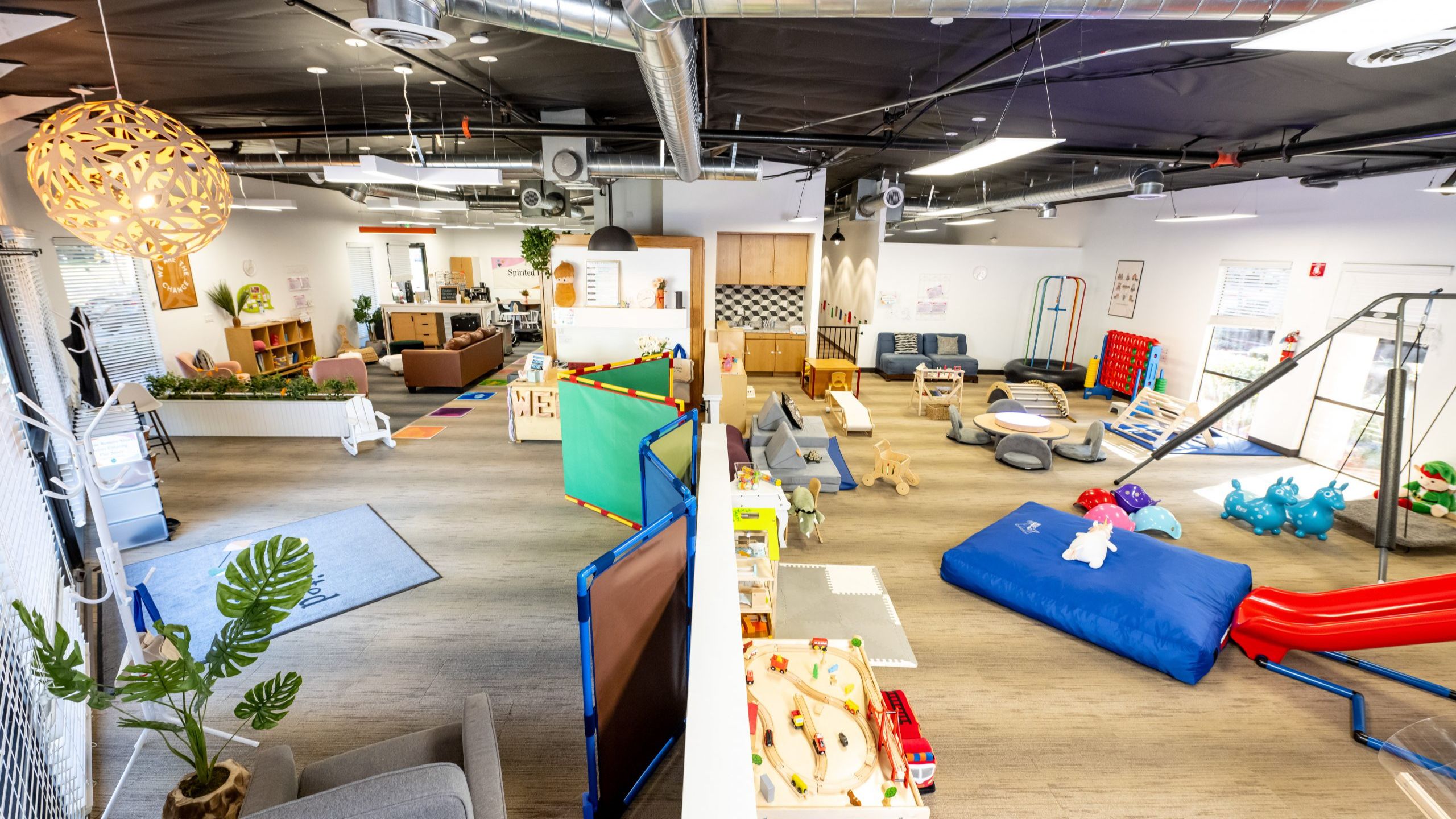
I sat down with Lindsay, the founder of Spirited Play Labs—an inclusive, membership-based play space in the San Francisco Bay Area designed specifically to support neurodivergent children and their families. Since opening her first location in 2021, she has expanded to three locations, with a fourth on the way.
Her growth was not accidental. It was the result of clear positioning, operational discipline, intentional hiring, and building systems that allowed the business to operate independently of her daily presence.
Here are the most important takeaways from our conversation.
1. The strongest businesses are built to solve a specific, deeply understood problem
Lindsay did not open a general play café and hope to find her niche later. She built Spirited Play Labs specifically to support neurodivergent children and their families, drawing from both her professional experience as a speech therapist and her personal experience as a parent.
This clarity shaped everything—from her physical design to her policies to her staffing model.
Because her mission was clear, her business naturally attracted the exact families she was trying to serve. She was not competing on price, aesthetics, or convenience. She was competing on relevance and trust.
That positioning made growth far easier and far more sustainable.
2. A membership-based model creates operational and financial stability
From the beginning, her business was structured around memberships rather than relying primarily on drop-in visits.
This provided several critical advantages:
Predictable recurring revenue instead of unpredictable daily fluctuations
More accurate staffing and scheduling
Stronger customer retention and lifetime value
A more controlled, consistent customer experience
Instead of starting every month at zero, she built a baseline of predictable income that allowed her to plan for growth and hiring with confidence.
This is one of the most important structural decisions an owner can make.
3. First-time visits should function as onboarding, not just transactions
Rather than allowing anyone to purchase a membership instantly online without context, Lindsay uses first-time visits as an intentional onboarding process.
This allows her team to:
Educate families on the philosophy and expectations of the space
Ensure the environment is a good fit for both the family and the business
Protect the culture and experience of the community
This approach prevents many of the operational and customer experience issues that arise when expectations are misaligned from the beginning.
It is far easier to set expectations early than to repair trust later.
4. Expanding beyond private-pay customers creates more stable revenue streams
One of the most impactful decisions she made was becoming a vendor with California’s Regional Center system, which allows qualifying families to have memberships covered through public funding.
This provided:
A consistent B2B revenue stream
A reliable referral source
Greater accessibility for families
Less reliance on traditional advertising
Many owners assume their only revenue source is individual families paying out of pocket. In reality, partnerships with organizations, school systems, and public programs can significantly strengthen financial stability.
This diversification reduces risk and increases long-term sustainability.
5. Hiring and developing strong managers is essential before scaling
Each of her locations has a full-time manager responsible for daily operations.
These managers are not simply staff members. They are trained leaders who oversee operations, staff performance, and customer experience.
She invests heavily in their development through training, mentorship, and ongoing leadership support.
This structure allows her business to operate independently without requiring her to be physically present at each location.
Without strong leadership at each site, scaling becomes fragile and unsustainable.
6. Systemized training protects consistency as you grow
As her business expanded, Lindsay developed structured training systems to ensure consistency across locations.
This included:
Formal onboarding processes
Leadership training
Standard operating procedures
Regular leadership meetings
Without systemized training, culture and customer experience inevitably become inconsistent as a business grows.
Systems ensure consistency. Consistency protects the brand.
7. Real estate decisions have long-term financial consequences
One of her biggest lessons was realizing how expensive and disruptive extensive buildouts can be.
She now prioritizes spaces that require minimal modifications and have favorable landlord relationships.
She focuses on operational functionality rather than cosmetic perfection.
Waiting for the right space often saves far more money and stress than rushing into an imperfect one.
Real estate decisions impact profitability for years—not just at opening.
8. You must intentionally transition from operator to owner
During her first year, Lindsay did everything herself.
Over time, she intentionally delegated responsibilities, developed leaders, and built systems that allowed her to step back from daily operations.
Today, her locations operate without requiring her physical presence.
This transition is essential for scaling. If the business cannot operate without the owner, growth will always be limited.
Owners must build systems that function independently of their personal involvement.
9. Partnerships and community relationships can outperform traditional marketing
Much of her growth has come through:
Word-of-mouth referrals
Professional partnerships
Community trust
Rather than relying heavily on paid advertising, she focused on building relationships and delivering exceptional experiences.
Trust-based growth is often more sustainable and cost-effective than paid marketing alone.
10. Staffing is the most important driver of customer experience
When asked what differentiates her business most from competitors, her answer was immediate: her staff.
Her team is carefully selected, trained, and developed to support families in ways that align with the business’s mission.
Facilities, equipment, and aesthetics matter—but staff ultimately define the customer experience.
Investing in hiring and training pays long-term dividends.
11. Tracking the right metrics becomes more important as you scale
As her business grew, Lindsay began tracking more detailed operational metrics, including:
Membership growth and cancellations
Conversion rates from first visit to membership
Staffing pipeline and training progress
Revenue and expense trends
These metrics allow her to identify patterns, anticipate challenges, and make informed decisions.
Growth without data leads to reactive decision-making. Data allows for proactive leadership.
12. Authenticity is one of the strongest competitive advantages an owner can have
One of the most powerful lessons from Lindsay’s journey is that she built a business aligned with her strengths, experiences, and values.
She did not try to replicate someone else’s model. She built something specific and meaningful to her community.
That authenticity built trust.
And trust built growth.
Scaling to multiple locations is not simply about increasing revenue. It requires building systems, developing leaders, making disciplined financial decisions, and maintaining consistency across locations.
Lindsay’s success demonstrates that sustainable growth is the result of intentional structure—not luck.
Her story reinforces a pattern I see repeatedly among the most successful indoor playground and play café owners:
The businesses that scale most effectively are the ones built on clear positioning, strong leadership, operational discipline, and a deep understanding of their customers.
Growth is not just about expanding locations.
It is about building a business that can operate independently, consistently, and sustainably.

