
Making Imagination Part of Your Business Model with Custom, High-Quality Commercial Play Homes
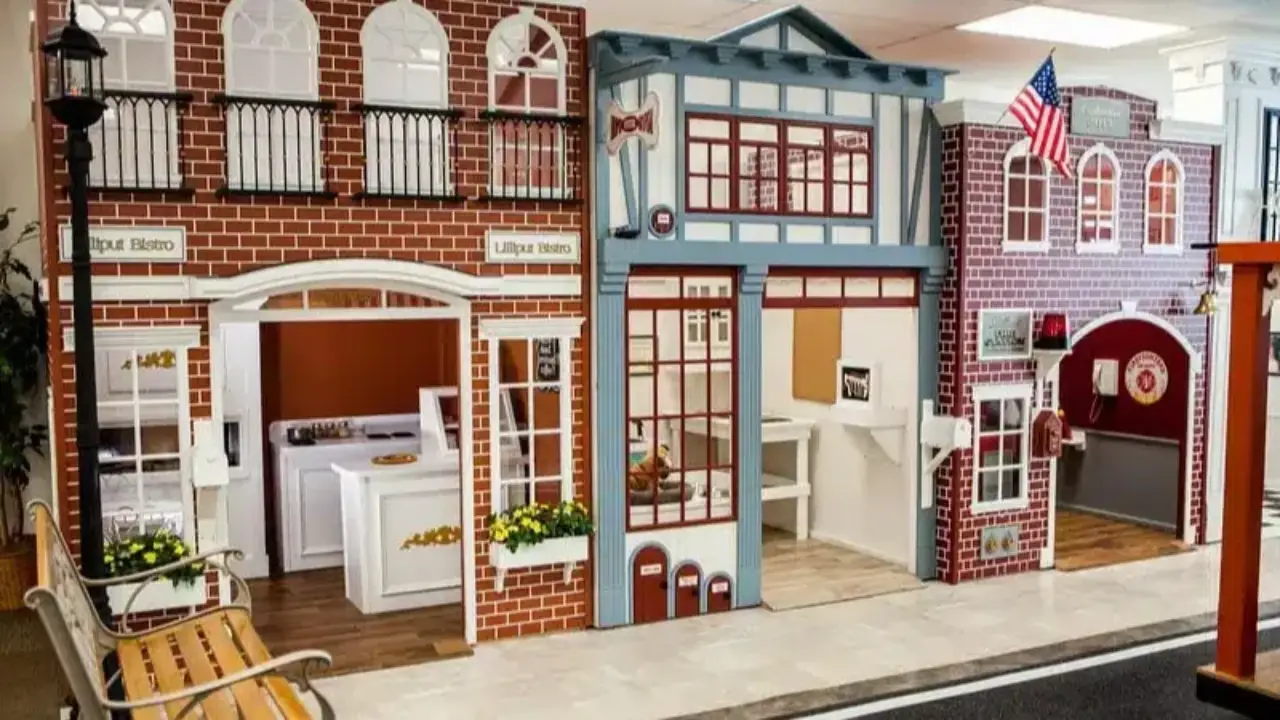
Making Imagination Part of Your Business Model
If you’re opening an indoor playground or play café, your play equipment will likely be one of the largest investments you make in your business.
And understandably, it’s also one of the places where owners are constantly looking for ways to stretch their budgets.
Can I have a local contractor build this instead? Can I recreate something I saw online? Do I really need equipment specifically designed for commercial use? Does it matter who installs it? What am I actually paying for when one company costs significantly more than another?
These are important questions, especially when you’re looking at a startup budget that can easily climb into the hundreds of thousands of dollars.
But one of the things I have learned after more than a decade in this industry is that play equipment is an area where comparing prices without comparing what you’re actually getting can be a very expensive mistake.
For a recent episode of The Profitable Play Podcast, I sat down with Steve and Dave from Lilliput Playhomes to talk about what actually goes into designing and building play environments for commercial spaces.
This is also a company I have a very long personal history with.
When I opened my own indoor playground in 2015, I chose Lilliput Playhomes for my space. More than a decade later, I have one of their residential playhomes in my own basement for my kids.
So I have experienced their process from both sides, and I’ve also watched hundreds of indoor playground and play café owners navigate equipment decisions through Play Cafe Academy.
The biggest takeaway from this conversation is one I think every prospective owner needs to understand:
Commercial play equipment is not simply residential equipment that happens to be placed inside a business.
There are entirely different considerations involved — from safety and accessibility to fire codes, installation, durability, insurance and even what happens to your equipment if you eventually relocate.
And those details matter a LOT.
From a Backyard Playhouse to Commercial Play Spaces
Lilliput Playhomes actually began in 1989 when founder Steve and his wife were looking for a playhouse for their daughter.
They weren’t finding what they wanted. Most of the available options were relatively simple plastic structures or basic log-cabin-style playhouses, so they decided to create something themselves.
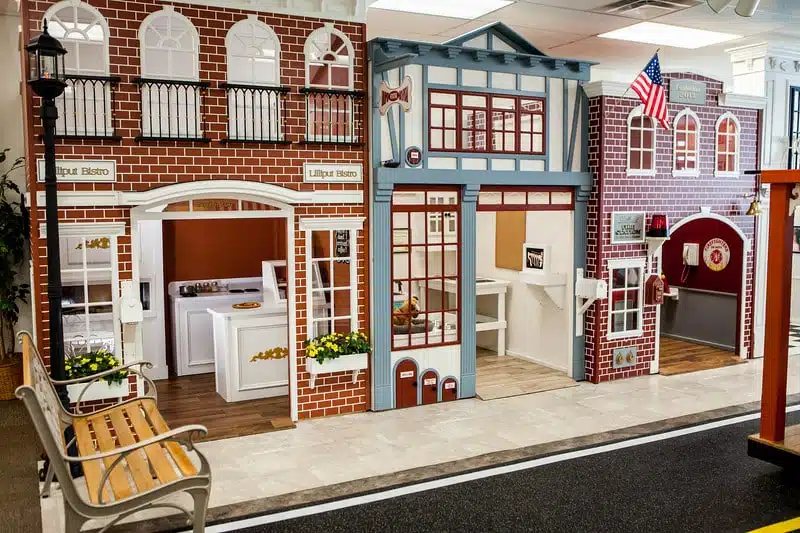
They took inspiration from an old Victorian home and recreated its architectural features on a child-sized scale.
What started as one backyard project eventually grew into a business, first serving customers around Pittsburgh and eventually expanding much farther. Over time, customers began using the playhouses to create larger play villages, which naturally pushed Lilliput into the commercial market.
But that transition also required them to rethink what they were building.
A playhouse that might be perfectly appropriate in someone’s backyard is operating under completely different circumstances when dozens — or potentially hundreds — of children are interacting with it every day.
Commercial environments introduced additional safety requirements, accessibility considerations, fire regulations and other issues that simply aren’t present in the same way with residential products.
That distinction is incredibly important for indoor playground owners.
Commercial Equipment Has to Do More Than Look Good
Social media has made it easier than ever to find inspiration for play spaces.
You can open Instagram or Pinterest and find beautiful play villages, Montessori-inspired spaces, custom pretend-play structures and incredibly aesthetic playrooms.
But when you are building a business, the question cannot simply be:
Does this look good?
You also need to ask:
Is this appropriate for commercial use?
A commercial play environment needs to account for factors like accessibility, fire regulations, entrapment hazards, protrusions, materials, durability and the realities of having large numbers of unrelated children using the equipment repeatedly. Lilliput explained that these considerations become a major part of the design process when equipment moves from residential to commercial use.
This is something I think newer owners sometimes underestimate.
When you’re trying to get a business open, it’s very easy to focus on the visible result.
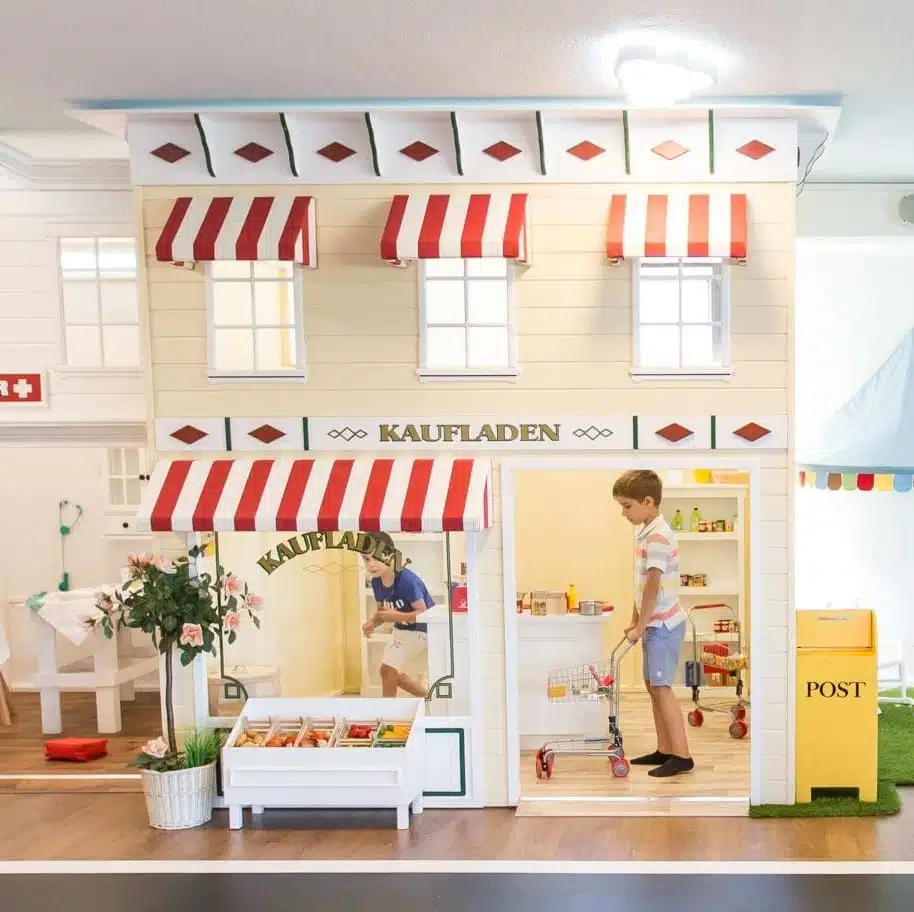
You want the adorable grocery store.
You want the little café.
You want the fire station.
You want the beautiful play village customers are going to photograph and post on Instagram.
But there is an enormous amount of work behind those structures that customers will never see.
And frankly, that invisible work may matter more than the paint colors.
Safety Needs to Be Part of the Design — Not Something You Address Later
One of the strongest themes throughout my conversation with Lilliput was safety.
This shouldn’t be surprising, but I think there is an important distinction here.
Safety is not simply something you inspect after a play structure has been built.
It needs to influence the design from the beginning.
When Lilliput described the commercial side of its business, the team discussed issues like ADA requirements, fire regulations and working through requirements that local jurisdictions may have for a type of business they haven’t encountered before.
And I see this issue ALL the time.
An entrepreneur comes up with an amazing concept for an indoor playground, takes it to a landlord or contractor, and then everyone starts building.
The problem is that your general contractor may be excellent at constructing retail spaces, restaurants, offices or homes without necessarily being an expert in commercial children’s play equipment.
Those are two very different areas of expertise.
This becomes especially important when owners start creating custom structures.
Something can look incredibly simple on paper and still introduce issues related to openings, heights, accessibility, materials, fall zones, entrapment or fire safety.
You do not want to discover those problems after the structure has already been built.
That is when saving money upfront can become VERY expensive.
The Local Contractor Question
This was probably one of the most important parts of our conversation because I see it happening more and more.
Owners get a quote from a commercial play equipment company and then think:
“My contractor could build something similar for less.”
And maybe they can.
But “can build it” and “should build it” are two very different questions.
Steve specifically raised several questions owners should consider when evaluating a contractor for children's play equipment: Does the contractor carry appropriate liability insurance for this type of work? Do they understand applicable playground-safety guidance? Do they understand entrapment hazards? Do they understand accessibility requirements? Do they know how to size and design the structure appropriately for the children who will actually be using it?
Those are very different questions from:
“Can you build me a cute little house?”
And this is where I want owners to be very careful about focusing exclusively on the initial quote.
If Option A costs less initially but requires modifications after an inspection, creates issues with your municipality, delays your opening, requires additional fire-safety work or creates insurance problems, was it actually the cheaper option?
Maybe not.
I have seen owners spend an enormous amount of money correcting things that could have been addressed much earlier if the right experts had been involved during the planning stage.
Installation Is Part of the Product
Another factor I think is dramatically underestimated when owners compare equipment companies is installation.
I have experienced Lilliput’s installation process twice now, and it is something I specifically brought up during our conversation.
When they installed the playhome in my basement, for example, the installers noticed that moving the structure a couple of feet from where I originally envisioned it would allow significantly more light into the playhouse.
I never would have thought of that.
They did because they install these structures all the time.
My commercial installation was even more memorable.
When I was opening my indoor playground in 2015, our build-out timeline got messy — as build-out timelines tend to do. Our concrete was ready, but our carpet installation had been delayed.
The Lilliput team worked around the issue, installed the playhouses on the bare concrete, and we coordinated the flooring around them so we could keep moving toward opening.
I still remember that experience more than ten years later because when you are days away from opening a business and one contractor or vendor falls behind, having another vendor that knows how to problem-solve is invaluable.
This is why I always encourage owners to ask equipment vendors:
Who actually installs this?
Are they employees?
Are they experienced specifically with this equipment?
Are they subcontractors hired locally?
What happens if something doesn’t fit exactly as expected?
Who is responsible for solving the problem?
Because something WILL eventually not go exactly according to plan.
That is construction.
And the vendor’s ability to solve problems can be just as valuable as the equipment itself.
Design Has to Account for the Actual Building
One thing owners sometimes don’t realize is how early installation logistics need to enter the design conversation.
You can design the most beautiful play structure imaginable, but you still have to get it into the building.
That means understanding doorways, hallways, ceiling heights, columns, stairs, existing fixtures and all of the other quirks of a commercial space.
Lilliput’s process involves designing the equipment for the individual location, prefabricating components, building and painting them before shipment, disassembling them for transportation, and then sending its installation team to put everything together onsite.
That means something as mundane as the width of an opening can affect how a component is designed.
This is another reason I think owners should involve their equipment companies as early as possible.
Your play equipment is not an isolated purchase.
It interacts with your floor plan, flooring, electrical, lighting, fire protection, accessibility, traffic flow and construction timeline.
The more communication that happens between those moving pieces, the fewer surprises you are likely to have during build-out.
Play Value Matters Just as Much as Aesthetics
Of course, safety and construction are only half of the equation.
At the end of the day, children still need to WANT to play with the equipment.
One of the questions I asked Steve was which Lilliput concepts tend to be the most popular, and he immediately identified three that they frequently recommend as the core of a play village: a grocery store, an animal hospital and some type of food-service concept.
The grocery store works because children recognize the experience. They see adults shopping, choosing products and checking out, and they get to recreate that experience themselves. Lilliput even offers an interactive scanning checkout that beeps and lights up as children move items across it.
The animal hospital takes another familiar experience and gives children multiple ways to interact with it, including stuffed animals, an X-ray component, pet-washing features, animal cages and other veterinary-themed activities.
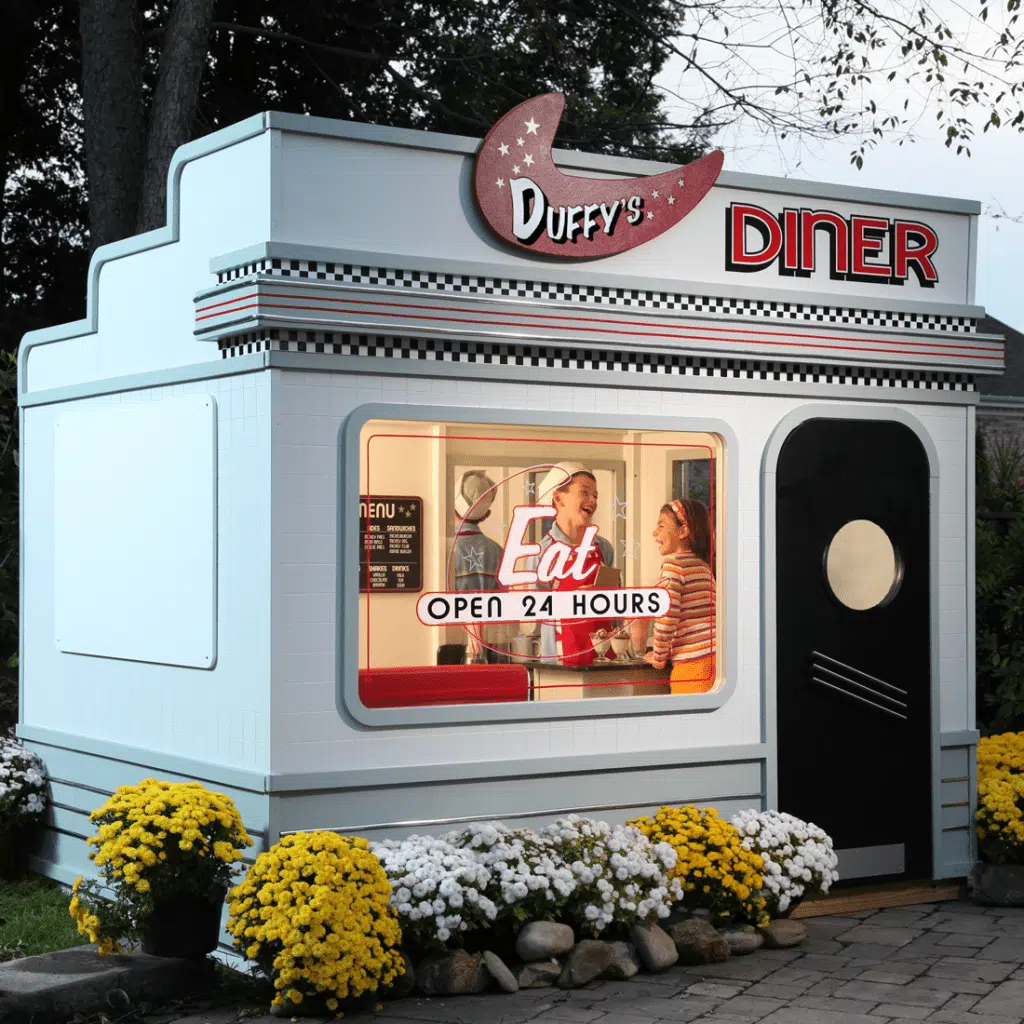
Food-service concepts can include cafés, pizza shops, diners and similar environments.
There is a lesson here that goes beyond Lilliput.
Familiar does not mean boring.
Sometimes owners become so focused on creating something nobody has ever seen before that they forget children LOVE recreating the world they already understand.
Grocery stores work because kids know grocery stores.
Restaurants work because kids see adults ordering, cooking and serving food.
Veterinary clinics work because kids understand animals and caring for them.
You can make the environment beautiful and unique, but the play itself should still be intuitive.
Small Interactive Details Can Create Enormous Play Value
Another part of the interview that I loved was our discussion about interactive elements.
Not every high-value play feature needs to be huge or complicated.
Sometimes it is literally a button.
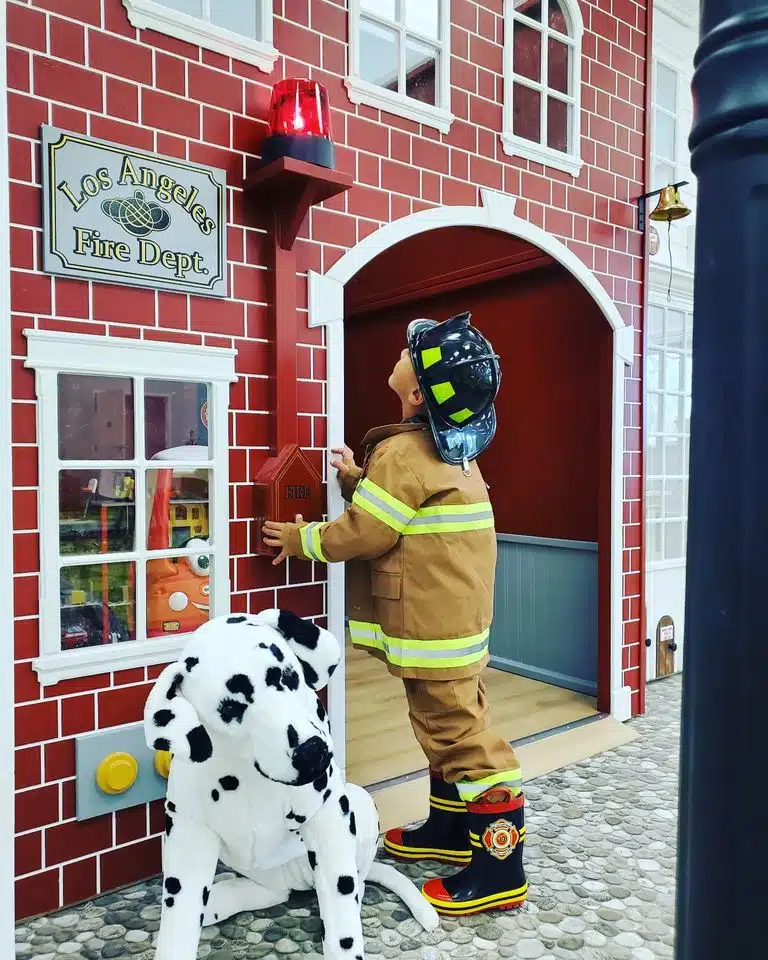
Steve talked about a revolving red light in a fire station that children can activate over and over again.
They also incorporate more elaborate interactive features, like a gas pump where children can remove the hose and squeeze the handle, triggering lights and sounds, or an ATM where children insert a card and activate sounds and buttons.
And again, the grocery-store scanner is one of their most popular interactive pieces.
This is something I think owners should pay attention to when evaluating play value.
Adults tend to look at equipment and evaluate the overall concept.
Children interact with individual DETAILS.
They push the button.
They scan the food.
They open the door.
They climb the stairs.
They hand someone the pretend pizza.
They do it again.
And again.
And again.
When you are evaluating equipment, ask yourself how many opportunities the environment gives a child to actually DO something.
A beautiful backdrop is not necessarily play.
Interaction is play.
Don’t Forget Gross Motor Play
This is something I talk about frequently because I think the current indoor-playground industry can sometimes swing too far toward imaginative play.
I love pretend play.
I built my own business around it.
But children also need opportunities to MOVE.
During the interview, I specifically brought up Lilliput’s firehouse and some of the other designs that incorporate stairs, climbing and slides directly into an imaginative-play environment.
I love this approach because imaginative play and gross motor play do not need to exist in completely separate parts of your facility.
A child can climb into a fire station.
They can slide out of a structure.
They can move between buildings.
They can engage in pretend play while still using their bodies.
And from an operational standpoint, gross motor elements also have an advantage: they generally require far less resetting than play environments filled with dozens of tiny loose pieces.
That matters if you are running timed sessions.
It matters if you have multiple birthday parties in one day.
It matters if your employees need to reset your play area between groups.
And it absolutely matters if you are trying to operate with a lean staff.
When I evaluate a play space now, I am always thinking about both sides of the equation:
What creates a great experience for the child, and what creates a manageable environment for the business?
The best design decisions accomplish both.
Your Play Space Doesn’t Have to Be a Row of Houses
Another misconception we discussed is that a play village has to consist exclusively of little buildings around the perimeter of a room.
There are plenty of opportunities to activate the center of the space as well.
Lilliput offers freestanding elements such as fire trucks, police cars, ice cream trucks, recycling trucks, bulldozers and construction-themed pieces, along with environmental details like lampposts, picnic tables and other accessories.
This matters from a design standpoint because dead space is expensive.
Every square foot of your lease costs you money.
That does NOT mean you should cram equipment into every available inch. Children need circulation space, caregivers need sightlines, and your facility needs to feel comfortable.
But you should be intentional about what each area of the play floor is contributing to the experience.
Sometimes one smaller freestanding element can create an entirely new play pattern without requiring another large structure.
Customization Can Make Your Business Feel Like It Belongs in Your Community
One of my favorite trends in play-space design is incorporating the local community into the play environment.
Instead of every play café having the exact same generic grocery store, bank and fire station, owners are increasingly looking for ways to make those environments specific to where they live.
Lilliput talked about recreating architectural features and recognizable landmarks from different communities.
And this opens up another opportunity I think owners should consider: sponsorships.
If you are going to have a pretend bank, could a local bank sponsor it?
Could a local veterinary clinic sponsor your animal hospital?
Could a local grocery store sponsor your market?
Could a local business help fund a structure in exchange for tasteful branding incorporated into the play environment?
Done correctly, this can create value for everyone involved.
The business gets exposure to local families.
The play café offsets some of its equipment or operating costs.
And the environment feels more connected to the community rather than looking like a generic play space that could exist anywhere.
Custom Does Not Have to Mean “Whatever Is Trending”
Lilliput has created some incredibly unusual custom environments over the years, including spaceships, an Old West town, a Bible-themed village and even a huge pirate ship.
But one comment from our conversation stood out to me.
When I asked about industry trends, Steve explained that they intentionally try not to chase every trend. Their approach is more classic and timeless.
I think that is an important consideration for owners.
Your business may exist for ten, fifteen or twenty years.
The aesthetic dominating Instagram this year may not.
There is nothing wrong with incorporating current design trends, but I would be cautious about making a six-figure equipment investment around an aesthetic that could feel dated in three years.
There is value in timeless play.
Kids have pretended to shop, cook, care for animals, drive vehicles and run businesses for generations.
Those play patterns do not disappear because a new color palette becomes popular on social media.
Think About Your Equipment as an Asset
One of the most interesting business points in our conversation had nothing to do with play.
It had to do with the physical structure of the equipment.
Lilliput's commercial playhouses are freestanding, which means they can potentially be repositioned within a facility, relocated to another facility or sold later as an asset.
That may not feel important when you are opening your first location.
You are probably not thinking about leaving.
But as a former owner who eventually sold my business, I want you to think farther ahead.
What happens when your lease expires?
What happens if you outgrow the space?
What happens if you open a second location?
What happens if you sell the business?
What happens if you decide to change the concept?
If your equipment is permanently built into the building, your options may be very different from equipment that can be moved.
That doesn’t automatically mean freestanding is always the right answer.
It means you should know what you are buying.
Is it equipment?
Is it a leasehold improvement?
Can it move?
Can it be resold?
What happens to it when your lease ends?
These are business questions, not just design questions.
The Cheapest Quote Is Not Always the Lowest-Cost Option
This is probably the biggest point I want prospective owners to take away from this entire conversation.
When you compare equipment vendors, do not compare the bottom-line numbers alone.
Compare what is actually included.
Who designs it?
Who understands the commercial safety considerations?
Who installs it?
Who deals with problems onsite?
What materials are being used?
How durable is it?
Can it be moved?
Can it be repaired?
What happens if something is damaged?
Does the company understand commercial children's environments?
What happens if your municipality raises an issue?
What kind of support do you receive during the process?
A cheaper piece of equipment that delays your opening, needs to be rebuilt, creates an insurance issue or needs to be replaced much sooner may ultimately be significantly more expensive.
As Steve pointed out during our conversation, using a general contractor can sometimes appear more cost-effective in the short term but create problems later if that contractor does not understand the requirements associated with children's play equipment.
That does not mean every owner needs to choose the most expensive equipment available.
It means you need to compare VALUE, not just price.
Ask Better Questions Before You Buy
If you are currently comparing equipment companies, I would encourage you to go into those conversations with a much more detailed list of questions than simply asking for a quote.
Ask about commercial experience.
Ask who designs the equipment.
Ask about safety.
Ask about accessibility.
Ask about materials.
Ask who performs installation.
Ask what happens if there is a problem onsite.
Ask whether the equipment can be relocated.
Ask about repairs and replacement parts.
Ask how the company coordinates with your general contractor and other trades.
Ask what information they need about your building before manufacturing begins.
And most importantly, pay attention to whether the company seems to understand that you are not simply buying playground equipment.
You are building a BUSINESS around that equipment.
There is a difference.
Design for the Child AND the Business
One of the reasons I enjoyed this conversation so much is that it reinforced something I talk about constantly inside Play Cafe Academy:
A great indoor playground cannot be designed exclusively from the perspective of what looks fun.
It also cannot be designed exclusively from the perspective of what looks good on Instagram.
You have to design for the child, the caregiver AND the operator.
Children need play value.
Parents need a space where they feel comfortable bringing their families.
Your staff needs a space they can realistically clean, reset and supervise.
And you need an environment that makes financial and operational sense for the business you are trying to build.
That is why decisions about equipment matter so much.
The right equipment isn't simply decoration.
It affects how long children stay engaged.
It affects whether families want to return.
It affects your staffing.
It affects your cleaning and resetting.
It affects your build-out.
It affects your insurance and safety considerations.
It affects your ability to relocate.
And ultimately, it becomes part of the experience your
business is known for.
That is why I think equipment decisions deserve so much more consideration than simply asking, “What will look best in my space?” or “Who gave me the lowest quote?”
You are making an investment in something that may be used by thousands and thousands of children over the life of your business. You want it to be engaging enough that kids want to come back, durable enough to withstand commercial use, manageable enough that your team can operate around it, and thoughtfully designed enough that you aren’t discovering expensive problems after your doors are already open.
And especially when it comes to imaginative play, I think there is a huge opportunity to think beyond simply adding a few cute playhouses to your floor plan. The right imaginative-play environment can become part of your business model. It can create the kind of play experience families cannot easily replicate at home, give children reasons to stay engaged longer and return more often, help distinguish your concept from competitors, and even create opportunities for local partnerships and sponsorships.
That is what I enjoyed most about this conversation with Steve and Dave. We weren’t just talking about what makes a beautiful playhouse. We were talking about the thought that has to go into creating imaginative play for a commercial environment — from safety and durability to installation, interaction, gross motor play, customization, and long-term flexibility.
If you are currently planning an indoor playground or play café, I would encourage you to think about your equipment through that larger lens. Don’t just ask what you want your play space to look like on opening day. Think about how children will actually use it, how your employees will manage it, how it will hold up after years of use, and how it fits into the business you are trying to build.
Because when play is designed thoughtfully, it isn’t just part of the décor. It becomes part of the reason customers choose your business in the first place.
Contact Lilliput: https://www.lilliputplayhomes.com/contact/
Email Lilliput: sales@lilliputplayhomes.com
About The Author

Michele Caruana
Play Cafe Academy Founder & Blog Author
I have over a decade of hands-on local business experience and tough lessons under my belt, and I am passionate about helping current and prospective play based business owners AVOID the same mistakes myself and SO many other business owner's make. Even though I have a Master's Degree in Economics and Years of Business and Marketing experience, it took me YEARS to "crack the code" and turn my Indoor Playground from an expensive hobby into a business-- and I want to get YOUR business get there in less time and with much less stress.
Categories
All Categories